
Food Decision Fatigue: Why You Hate Deciding What's for Dinner
Tired of the nightly 'what's for dinner?' scramble? It's not laziness — it's food decision fatigue. Here's what's really going on and how to fix it.
Food Decision Fatigue: Why You Hate Deciding What’s for Dinner
You’ve been making choices all day. At work, for the kids, about things that barely matter and things that really do. And now it’s 5:30pm, and your brain has to answer the one question it’s been asked a thousand times before: what’s for dinner?
That tired, blank feeling isn’t laziness. It’s food decision fatigue.
It’s not the cooking. It’s the deciding.
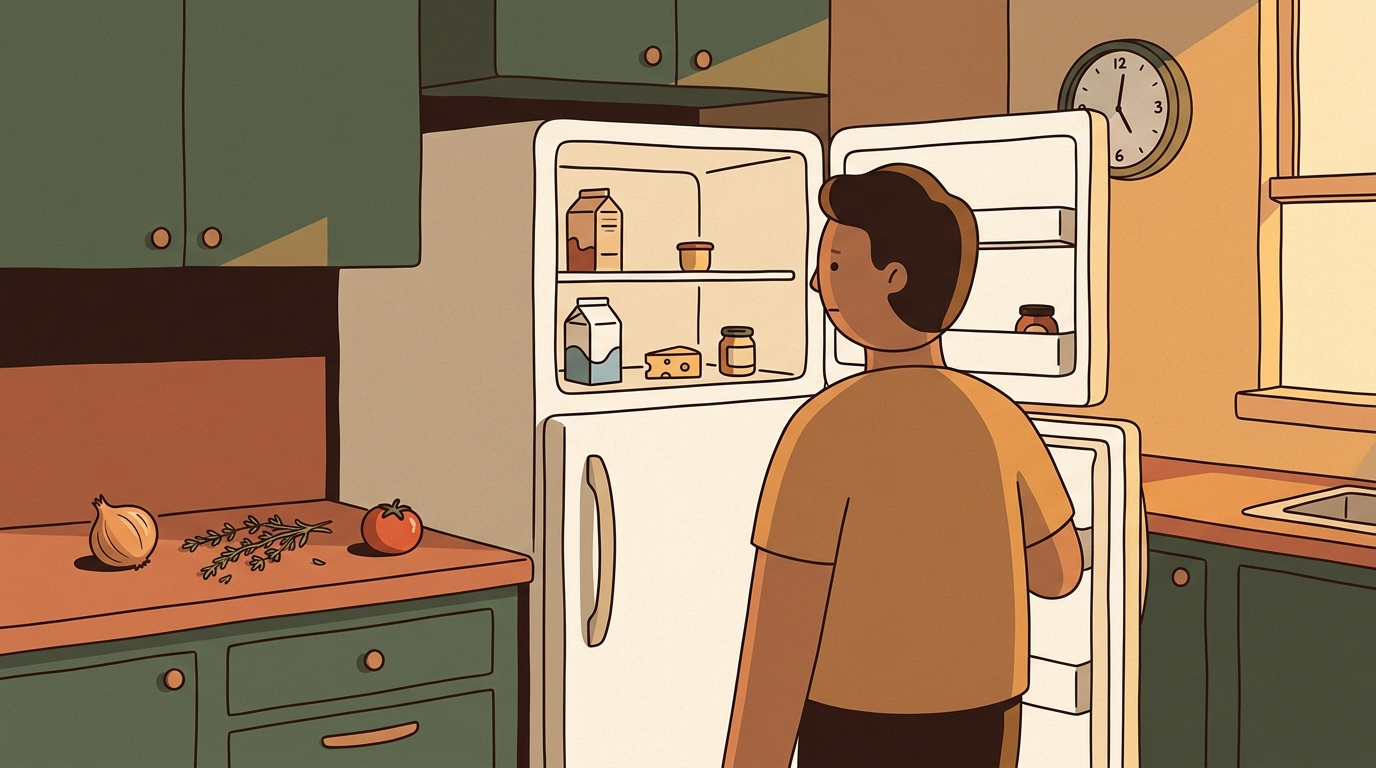
The cooking part is usually fine once you know what you’re making. It’s the open question that drains you. You stand in the kitchen, open the fridge, stare into it, close it, open it again as though something new might have appeared in the last thirty seconds. You scroll through a recipe app. Close it. Text your partner “what do you want for dinner?” already knowing the answer will be “I don’t mind, whatever.”
A 2024 survey by Factor and Wakefield Research found that 68% of families say deciding what to eat is their biggest mealtime challenge. Not the shopping, not the cooking. The decision itself. And it makes sense: your brain at 5:30pm isn’t the same brain you had at 9am. By evening, you’ve spent your best thinking on everything else, and dinner sits right at the bottom of the curve. The frozen chips on Thursday night aren’t a failure of willpower. They’re your brain conserving what little decision-making energy it has left.
That’s the reframe worth sitting with for a moment. The bottleneck isn’t skill, or time, or motivation. It’s the decision. Research in the journal Nutrients confirms what most parents already sense: as cognitive resources deplete through the day, people shift toward automatic, low-effort food choices. Which means the fix isn’t learning to cook faster or finding better recipes. It’s making fewer decisions at the moment when deciding is hardest.
What food decision fatigue relief actually looks like
Relief isn’t 40 new recipes or a Sunday afternoon spent batch cooking. If you’re already tired of deciding, more options is the opposite of what helps.
Relief looks like the decisions being made before you’re tired, when you still have the headspace to think clearly. That’s the whole idea behind meal planning that actually works: you move the thinking to a moment when thinking is easy, and the rest of the week runs on what you’ve already decided.
The Sunday decision-shift is the simplest version of this. Not Sunday meal prep, which is a whole different commitment. Just Sunday decision-making. Ten minutes on a Sunday evening, when your head is still clear, choosing five dinners for the week. Write them down. Make one shopping list. Done. The rest of the week, you’re executing, not deciding. And executing is the easy part. [INTERNAL LINK: plan-weeknight-dinners-10-minutes]
You know the difference between a weeknight where you’re following a plan and a weeknight where you’re improvising from scratch. The first one is calmer. Not because the meal is better, but because you’re not spending mental energy you don’t have. There’s something almost luxurious about coming home on a Wednesday and knowing that the chicken thighs are already defrosted, the broccoli’s in the crisper, and all you have to do is turn on the oven. That Wednesday version of you doesn’t stand in front of the fridge hoping for inspiration. She just cooks.
The ten minutes on Sunday might feel like one more thing on the list. It’s not. It’s the thing that takes five other things off the list. And once you’ve done it a few times, it stops feeling like planning and starts feeling like muscle memory.
Theme nights work because they cut the decision space down. If Monday is always pasta night and Wednesday is always something from the slow cooker, you’re not choosing from thousands of possibilities. You’re choosing from a handful. The constraint feels like freedom. Taco Tuesday exists for a reason, and it’s not because tacos are the best food on earth. It’s because not having to decide is the best feeling on a weeknight. You can still vary what you make within the theme, but the category is already chosen. That’s one less decision, five nights a week. Some families do stir-fry Thursdays, soup Sundays, or anything-from-the-freezer Fridays. The specific themes don’t matter. What matters is that the blank page becomes a fill-in-the-blank.
And then there’s the rotation. Most families already eat the same eight to ten meals on repeat. That’s not boring. That’s efficient. Write down the meals your household already likes, put them in a four-week rotation, and you’ve eliminated weekly planning entirely. A roast chicken one week, a simple pasta the next, that one-pan rice dish everyone asks for. When someone says “we eat the same things every week,” the honest response is: yes, and that’s fine. The idea that you need to keep discovering new meals to be a good home cook is what keeps people stuck. Your family doesn’t need novelty. They need dinner on the table without anyone having a meltdown first. [INTERNAL LINK: picky-eater-meal-planning]
If you want to add something new, try swapping in one new recipe a month instead of chasing a new one every week. A rotation with one slow-changing slot gives you variety without the cognitive load of constant reinvention.
There’s a particular kind of calm that comes from opening the fridge on a Tuesday evening and already knowing what you’re making. Not the smugness of having it all figured out, but the quiet relief of one less thing to think about at the end of a long day. The kitchen light’s on, someone’s asking about homework, and dinner is just… handled. You didn’t agonise over it. You didn’t scroll through three apps. It was already decided, days ago, when you had the headspace for it.
The small shifts that change the week
You don’t need to overhaul everything. A couple of small moves can change the shape of your week.
One is letting someone else make the call. Ask your partner to pick two nights. Let the kids choose one, not from an open field (that leads to pasta every single night) but from two options you’re comfortable with. Even a six-year-old can choose between chicken wraps and veggie fried rice. They feel involved, you’ve got one fewer decision to make, and the answer comes in about four seconds. The point isn’t who decides. It’s that the deciding happens once, early, and then it’s finished.
Another is making the shopping list part of the plan instead of a separate task. One of the hidden costs of deciding dinner on the fly is that you also have to solve the ingredients problem in real time. When the week’s meals are chosen in advance, the shopping list writes itself. One trip, one list, everything you need. No more standing in the supermarket aisle at 5:15pm trying to remember whether you have onions at home. This also tends to cut down on the random bits and pieces that end up in the fridge and never get used, the half-bunch of coriander wilting in the back, the cream you bought for a recipe you never made. [INTERNAL LINK: food-waste-family-cost]
And if all of this still sounds like a lot, start even smaller. Pick three dinners for next week instead of five. Leave two nights open for leftovers or whatever’s in the freezer. Three planned dinners is still three fewer decisions than zero, and it’s enough to feel the difference by midweek.
These aren’t dramatic changes. They’re the kind of thing that, after a few weeks, you stop noticing because the stress simply isn’t there anymore.
The week feels different when dinner is sorted
Monday feels different when you already know what you’re making. You come home, the ingredients are in the fridge, and the only question is whether to start the rice or the vegetables first. That’s a question your 5:30pm brain can handle. Tuesday, same thing. By Wednesday, you stop even thinking about it. Thursday, you might swap something around because the day went sideways, and that’s fine. Swapping one meal is a smaller decision than starting from zero.
There’s a version of your evening where the kids are doing homework at the table, something’s warming on the stove, and you’re not stressed about it. Not because everything went perfectly, but because this one thing was already sorted. The mental space that opens up is quiet, easy to miss, but real. You might not notice it as relief. You might just notice that Tuesday felt lighter than usual.
The people who seem to have dinner figured out aren’t better cooks or more organised people. They’ve just found a way to make the decision once instead of five times. That’s it. That’s the whole trick.
Not perfectly. Not every week. But enough that the nightly “what’s for dinner?” stops feeling like the hardest question of the day.
[PHASE 1 CTA PLACEHOLDER]