
Food Waste at Home: EUR 552 Per Year Your Family Throws Away
Dutch families waste EUR 552 of food at home every year. The fix isn't a better shopping list — it's knowing what you're cooking before you shop.
Food Waste at Home: EUR 552 Per Year Your Family Throws Away
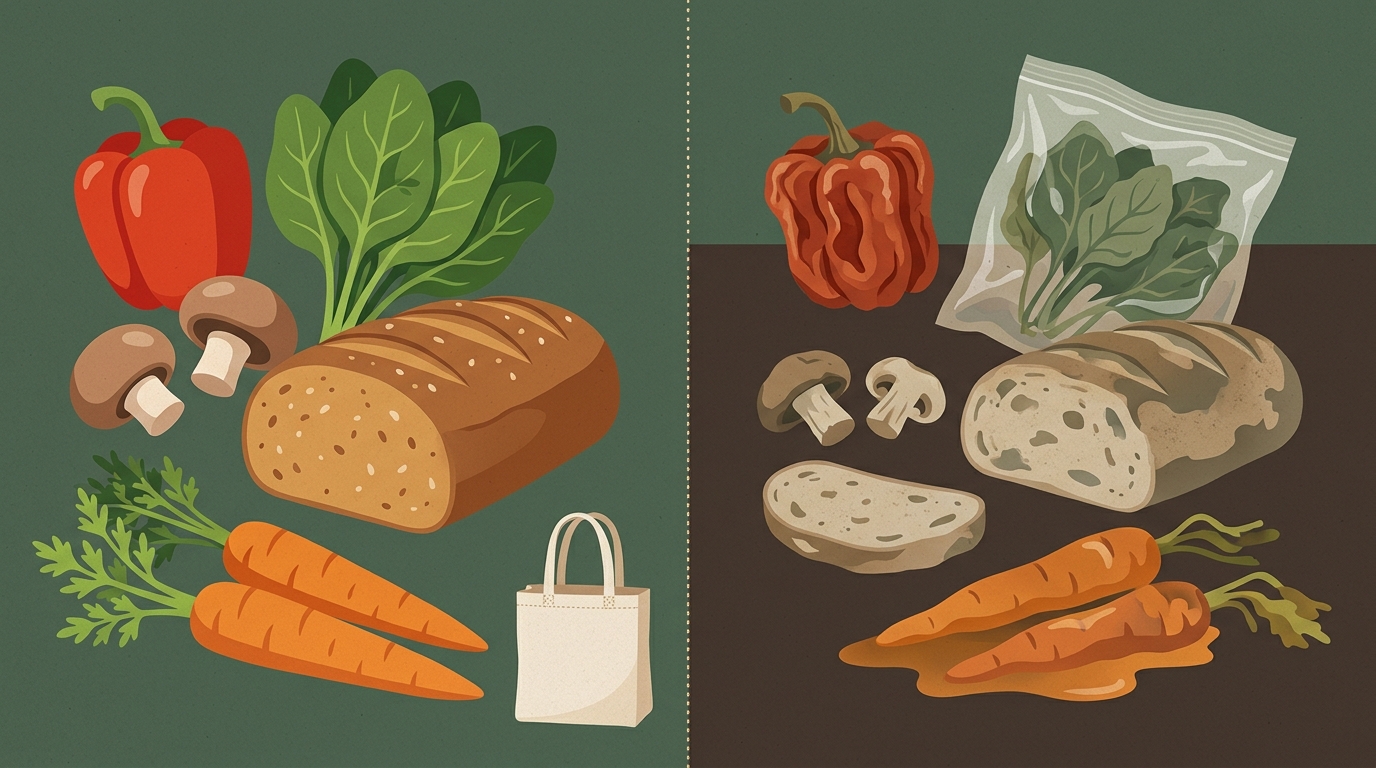
You probably think your food waste problem starts in the fridge. Something goes soft in the back, you forgot about the leftovers, the bread went stale before anyone touched it. But most food waste at home doesn’t happen because you forgot to cook something. It happens because you bought it without knowing when you’d cook it. According to the Voedingscentrum, the average Dutch person throws away EUR 138 of edible food per year. For a family of four, that’s EUR 552: roughly a weekend away, or ten months of streaming subscriptions, quietly disappearing into the bin one soggy bag of spinach at a time.
That’s not a number designed to make you feel bad. You already feel bad about it. Most people do. The gap between “what you bought” and “what you cooked” is where almost all of that money goes. And closing it is simpler than you’d expect.
It’s not the fridge. It’s the supermarket.
A study of Dutch consumers published in the journal Sustainability found that in-store buying behaviour is the single biggest driver of food waste at home. Not forgetting leftovers. Not cooking too much. Buying more than you’ll use. The same study found something else worth sitting with: using a shopping list, on its own, had no significant effect on how much food people wasted. What made the difference was knowing, before you walked into the store, what you were going to cook.
It makes sense when you picture a typical supermarket trip. You’re there after work, a bit tired, moving through aisles designed to get you to add things to the trolley. Your self-regulation is already low from a day of decisions, and every “might as well grab that” adds an item you’ll never cook. The second bag of peppers. The fancy cheese that sounded good in the moment. The carrots that will quietly liquefy in the back of the fridge by Thursday. None of it was on a list. All of it was bought with good intentions. None of it made it to a plate. [INTERNAL LINK: food-decision-fatigue-dinner]
This isn’t a willpower problem. It’s a structural one. The supermarket is built to override your plan, and if you don’t have a plan, there’s nothing to override. The guilt you feel on Sunday morning, dropping a bag of wilted spinach into the bin, isn’t really about the spinach. It’s about the decision you made in the shop on Tuesday evening when you were too tired to think clearly about what you’d actually cook that week.
Most people already know food waste at home is a problem. You don’t need another reminder. The guilt is there. What’s missing isn’t motivation. It’s a system that makes the right decision easier than the wrong one.
Five meals, one list, less food waste at home
The pattern in the research is clear: waste drops when people know what they’re eating before they go shopping. Not a vague sense of “we should eat healthier this week.” Specific meals, specific days. That specificity changes everything about what ends up in the trolley.
Plan five meals, then shop for those five meals. When you know Monday is pasta, Wednesday is stir-fry, and Friday is something from the freezer, the shopping list writes itself. It’s a short list. Fewer impulse buys, fewer items wilting in the crisper drawer. This is the single biggest change most families can make, and it works not because it requires discipline, but because it removes the conditions that lead to overbuying in the first place. You’re not fighting the urge to grab extras. You’re walking in with a clear purpose and walking out with exactly what you need. [INTERNAL LINK: plan-weeknight-dinners-10-minutes]
The second piece is sequencing. Put perishable meals early in the week: fresh fish on Monday, a salad-based meal on Tuesday. Meals with hardy vegetables (carrots, cabbage, frozen ingredients) go later in the week. This isn’t meal prep. It’s just putting the most time-sensitive ingredients first, so they’re still fresh when you cook them instead of going limp by Thursday. Think of it this way: if you buy fresh salmon on Saturday and plan to cook it on Wednesday, you’re betting that salmon survives five days in the fridge. It probably won’t. But if Monday’s dinner is the salmon, you bought it yesterday and you’re cooking it tomorrow. That’s a gap your ingredients can handle. Most food waste happens because the time between “bought” and “cooked” stretches too long. Shortening that window for your most perishable ingredients is where the biggest savings sit.
Check the fridge before you plan, not after you shop. This sounds obvious, but most people do it backwards. They buy what sounds good, come home, and try to combine it with what’s already there. Two packs of cream cheese. A second bottle of soy sauce. Another bag of onions when there were already three rolling around in the drawer. Checking first means you build the week around what you have and only buy what’s missing. That half bag of rice from last week is Tuesday’s base. The frozen peas are Wednesday’s side. The onions you bought in bulk are still perfectly fine. You’d be surprised how much of the week’s shopping is already sitting in your kitchen, waiting to be used instead of replaced. [INTERNAL LINK: picky-eater-meal-planning]
And buy less than you think you need. This is the counterintuitive one. Most families overbuy as insurance against running out. But running out of one ingredient on Thursday is a minor inconvenience. Throwing away three unused ingredients on Sunday is money in the bin. A shorter shopping list isn’t a sign of poor preparation. It’s a sign you know exactly what you’re making. Two adults and two children don’t eat the same volume as four adults. Scale for your real household, not for an imagined one. Leftovers are fine when planned. Leftovers from overbuying, night after night, just become next week’s waste.
The promotions trap
Two-for-one on peppers sounds like a bargain. But if your week’s meals don’t call for six peppers, half of them will go soft before you use them. Promotions save money only when they match what you’re actually cooking. Otherwise, they’re a discount on future bin contents.
Walking past a deal that doesn’t fit your plan isn’t wasteful. Buying it and not using it is. The instinct to grab a bargain is strong, especially when the store is engineered to make you feel like you’re missing out. But a deal only counts as savings if the food ends up on a plate. The promotional display at the end of the aisle isn’t there because you need it. It’s there because the store needs you to buy it. Those are different things.
One useful rule: if the item isn’t on your list and you can’t name the meal it’s for, leave it on the shelf. You won’t miss it on Wednesday. And you won’t be throwing it away on Sunday. That single habit changes how your fridge looks by Friday.
It also changes how shopping feels. When you’re not browsing for inspiration under fluorescent lights at 6pm, a supermarket trip gets shorter and calmer. You’re in, you’re out, and nothing in your trolley is there by accident. You spend less time in the store, less money at the checkout, and less guilt on Sunday morning. All from one small shift: deciding what to cook before deciding what to buy.
A lighter fridge on Friday
There’s a quiet satisfaction in opening the fridge on Friday evening and seeing it mostly empty. Not bare-cupboard empty. Planned empty. Everything you bought got used. The vegetables became meals. The bread got eaten. The only things left are the staples that live there permanently: the butter, the condiments, the jar of pickles that’s been there since autumn. That’s what a good week of shopping looks like. Not a full fridge. A used one.
EUR 552 a year isn’t gone because your family eats too much. It’s gone because the gap between buying and cooking was wider than it needed to be. Closing that gap doesn’t take a spreadsheet or a complete change in how you shop. It takes knowing, on Sunday evening, what you’re eating Monday through Friday. Five meals. One list. The rest is following through.
That Friday fridge is what it looks like when the plan worked. Not a perfect plan. Not a rigid one. Just enough structure that the food you bought became the food you ate. The money you spent on groceries stayed on the table instead of ending up in the bin. And Sunday’s shop will be lighter too, because you’re starting from a clean slate instead of trying to work around the half-used ingredients from last week’s unfinished plans.
Not perfectly. Not without the occasional forgotten courgette. But enough that the bin feels lighter and the fridge feels less like a graveyard of good intentions.
[PHASE 1 CTA PLACEHOLDER]