
Sorrel
← Back to blog
Feeding Real Families
41 min read

Meal Planning When Everyone Eats Differently: A Family Guide to Allergies, Intolerances, and Dietary Choices

Cooking for a family with allergies, intolerances, and dietary choices doesn't mean three separate dinners. The base + branch method keeps one cooking session feeding everyone.
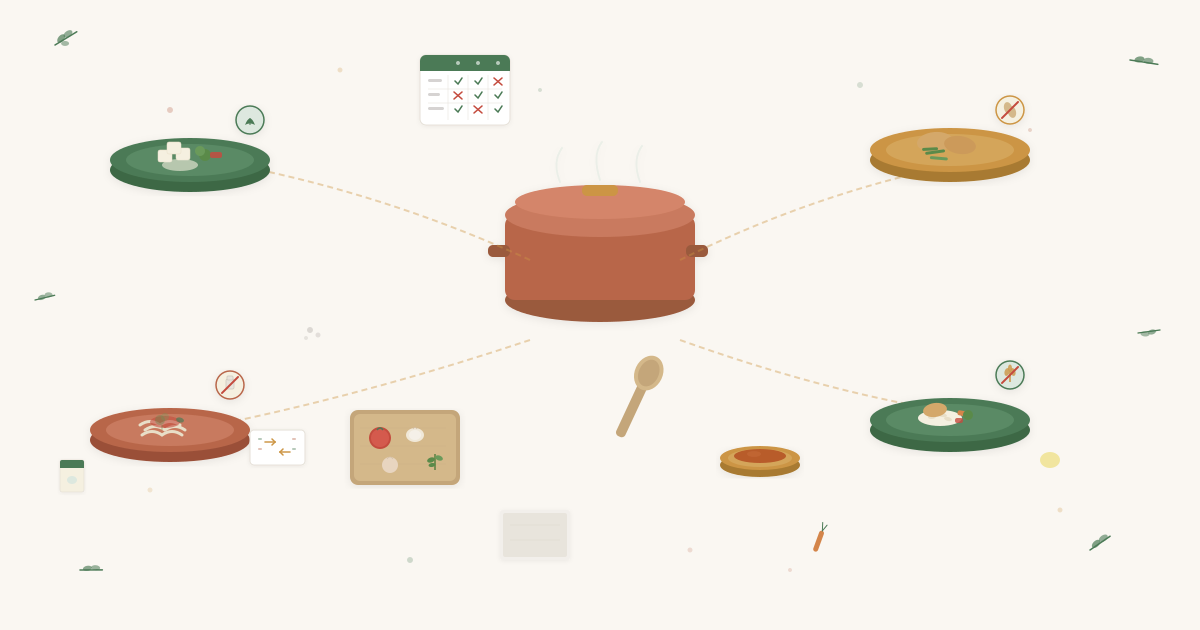
A family kitchen counter with one base meal being divided into different variations for family members with different dietary needs

Meal Planning When Everyone Eats Differently: A Family Guide to Allergies, Intolerances, and Dietary Choices

It’s Sunday evening and you’re trying to plan the week’s dinners. Your daughter was diagnosed with a dairy allergy six months ago. Your thirteen-year-old announced he’s vegetarian in September. Your partner can’t eat gluten. And the toddler, well, the toddler eats about seven things, three of which contain cheese. You stare at the blank meal plan and think: how am I supposed to cook one dinner that works for all of these people?

So you don’t plan. You wing it. Every night becomes a negotiation between what’s in the fridge, who can eat what, and how many pans you’re willing to wash. By Wednesday, you’re cooking two or three separate meals each evening, and by Friday, everyone’s having toast. Not because you can’t cook. Because the mental arithmetic of managing four different sets of dietary requirements while also being a parent, an employee, and a person who hasn’t sat down since 7am is simply more than your brain can process at 5:30pm.

If this sounds like your house, you’re not alone. According to the European Academy of Allergy and Clinical Immunology (EAACI), around 8% of children in Europe have a diagnosed food allergy — and that figure has been rising for the past two decades. Meanwhile, vegetarianism among Dutch teenagers has roughly doubled in the past decade. Add lactose intolerance (affecting an estimated 15-20% of Northern European adults), coeliac disease, or simple dietary preference, and the average family dinner table is more nutritionally complicated than it’s ever been. Most meal planning advice assumes one diet for the whole household. When that assumption breaks down, families don’t just lose their meal plan. They lose their evenings.

This article is about getting those evenings back. Not by cooking separate meals for everyone, but by building a system where one cooking session feeds the whole family — dietary differences and all. It’s called the “base + branch” method, and it works because it accepts the reality of your table instead of wishing it away.

The “two-dinner problem” — why families with mixed diets feel stuck

There’s a particular kind of exhaustion that comes from managing multiple diets in one household. It’s not dramatic. Nobody’s going to write a sympathy card about it. But it’s real, and it’s nightly: the mental calculation of who can eat what, the second pan on the stove, the quiet guilt when the person with the allergy gets a plain version of what everyone else is having.

The mental load goes far beyond the cooking itself. It’s the label reading at the supermarket, turning over every jar and packet to check for hidden allergens. It’s the restaurant research — calling ahead to ask about cross-contamination, studying menus online before you book. It’s the school communication: the letter to the teacher, the conversation with the birthday party host, the broodtrommel that has to be safe every single day. It’s the mental database of which brands are safe, which sauces contain hidden dairy, and which “vegetarian” products were processed in a factory that also handles nuts. Research published in the Journal of Allergy and Clinical Immunology found that parents of children with food allergies report quality-of-life impacts comparable to parents of children with diabetes — and that the psychosocial burden increases with each additional allergen managed.

Families with mixed dietary needs tend to fall into one of two traps. The first is cooking entirely separate meals: a vegetarian dinner, a gluten-free dinner, and a “normal” dinner, every single night. This is technically inclusive, but it’s unsustainable. You’re running a small restaurant with no staff, no budget, and customers who complain about everything. The cooking time doubles or triples. The washing-up multiplies. The shopping list becomes three shopping lists. And the person doing most of this work — research consistently shows it’s usually one parent, most often the mother, even in households that share other domestic tasks fairly — burns out within weeks.

The second trap is the opposite: defaulting to the most restrictive diet for the whole family. Everyone eats gluten-free, nut-free, and dairy-free, whether they need to or not. This simplifies cooking but breeds resentment. The fifteen-year-old who has no dietary restrictions starts to feel like he’s being punished for someone else’s allergy. The family’s meal repertoire shrinks to a fraction of what it was. Cooking becomes joyless — not because the food is bad, but because the constraints feel artificial for four out of five people at the table.

Both approaches lead to the same place: families giving up on meal planning altogether. Research from the EAACI shows that parents managing food allergies report significantly higher stress around mealtimes, and that this stress peaks not at diagnosis but months later, when the daily reality of cooking differently sets in. The adrenaline of a new diagnosis fades. The helpful websites get bookmarked but not revisited. What remains is the grinding, nightly question: what can everyone eat tonight?

Traditional meal planning advice doesn’t help, because it wasn’t designed for this. “Plan five dinners for the week” works beautifully when everyone at the table has the same requirements. When they don’t, the standard approach just highlights the gap. You end up with a plan that works for three family members and a separate mental plan for the other two. That’s not one system. That’s two systems pretending to be one.

You need a different approach — one that treats dietary differences as a design constraint built into the system from the start, not bolted on as an afterthought.

The “base + branch” meal planning method

Here’s the idea that changes everything: instead of cooking separate meals for each person, you cook one base meal and branch it at the last step into variations. Eighty percent of the cooking is shared. Only twenty percent is customised. One shopping trip. One prep session. One set of pans on the stove. Multiple plates that look different but started from the same place.

The base is the shared foundation — the part of the meal that works for everyone, or at least for most people. The branches are the small adaptations that happen at the end: a different protein, a different topping, a substituted ingredient. The beauty of this approach is that the person with the restriction isn’t eating an afterthought. They’re eating a version of the family dinner that was designed for them from the beginning.

Let’s make this concrete with three examples.

Pasta night, branched. You cook the pasta and the sauce base together — onions, garlic, tinned tomatoes, herbs, a splash of red wine if you like. This base is naturally dairy-free and can easily be gluten-free if you use gluten-free pasta. At the point where you’d add the protein, you split the sauce into two pans. Two-thirds gets the mince, browned and seasoned. One-third gets lentils or white beans for the vegetarian — these cook in the sauce in the same time as the mince. When it’s time to serve, the dairy-free family member gets the sauce without parmesan on top (or with nutritional yeast, which melts nicely and tastes more like cheese than you’d expect). The gluten-free member gets their separate pasta, cooked in its own pot, with the same sauce. Everyone sits down to pasta night. Everyone’s plate looks slightly different. Nobody cooked three meals. The base was one cooking session. The branches took five extra minutes.

Stir-fry night, branched. Same vegetables, same rice. You chop everything together — peppers, broccoli, mangetout, carrots, whatever you have. The wok does one round of vegetables. Then you split the protein: chicken thighs for the omnivores, sliced tofu for the vegetarian (marinated in the same sauce for flavour consistency). If someone has a soy allergy, their portion of the stir-fry sauce uses coconut aminos instead of soy sauce — a one-for-one swap that tastes nearly identical. If the family includes a gluten-free member, use tamari (which is naturally gluten-free) instead of regular soy sauce for the whole dish — nobody notices, and you’ve eliminated a branch point entirely. The base is identical. The branches take five minutes and one extra pan.

Taco night, branched. This one is almost too easy, which is why taco night is the gateway drug for base + branch meal planning. The shells (or corn tortillas — naturally gluten-free), the shredded lettuce, the salsa, the rice, the lime — all shared. The protein is where it splits: seasoned beef mince, spiced black beans, or shredded pulled jackfruit. Each cooks in its own pan but with the same spice profile, so the table smells cohesive. Toppings are individual: grated cheese for those who eat dairy, guacamole and sour cream (or dairy-free alternatives) for those who don’t. Taco night is naturally “base + branch” because assembly happens at the table, not the stove. Everyone builds their own plate. The child with the allergy isn’t handed a different meal — they’re choosing from the same buffet, just skipping the ingredients that don’t work for them.

The point isn’t that every meal splits neatly. Some do. Some don’t. A complex risotto where the cheese is stirred through the entire dish is hard to branch (though you can set a portion aside before the cheese step). A roast where the gravy contains flour is awkward for the gluten-free member (though a cornstarch-thickened gravy works just as well). But most family dinners have a natural division point where you can branch, and once you start looking for it, you see it everywhere. Soup splits before you blend. Pizza splits at the topping stage. A roast dinner splits at the gravy and sides. Curry splits at the cream. Sandwiches split at the filling. The base is always bigger than the branch.

This matters because it reframes dietary restrictions from “extra work” to “minor adaptation.” You’re not cooking three dinners. You’re cooking one dinner with three endings. The psychological shift is significant: instead of dreading the complexity, you start seeing it as a small variation on something you were already going to cook. And the time impact confirms this — once you’ve practised a few base + branch meals, the branch adds three to five minutes to a meal that was already happening.

When Sorrel launches later this year, this is exactly how its meal planning AI works for multi-diet families. You tell it who eats what — the dairy allergy, the vegetarian, the coeliac, the picky four-year-old — and it generates weekly plans where the base is shared and the branches are mapped out automatically, including a single shopping list that covers all the variations and flags exactly which items are substitutions. But the principle works on paper too. You don’t need an app to start. You need the mental model. The app just makes the planning part faster.

Common family dietary scenarios (and how to plan for each)

Every household’s combination of dietary needs is different, but certain patterns come up again and again. Here’s how the base + branch method applies to the five most common ones, with practical tips that go beyond theory.

One vegetarian, rest omnivore

This is the most common mixed-diet household in Europe, and it’s getting more common every year. The Vegetariërsbond reports that the number of Dutch people eating fully vegetarian or flexitarian has grown steadily, with the sharpest increase among 15-to-25-year-olds. Across Europe, the trend is similar: one in four young adults now identifies as flexitarian or vegetarian. If your teenager came home from school one day and announced they’re not eating meat anymore, you’re in very large company.

The simplest approach is what we call the “flex base”: plan three vegetarian dinners per week for the whole family. A good vegetable curry, a pasta with roasted vegetables, a bean chilli, a mushroom risotto — meals that are vegetarian by nature, not by substitution. When the dinner is designed as vegetarian from the start, nobody feels like they’re eating the compromise option. Everyone eats the same thing, no branching needed. These three nights are your easiest cooking nights of the week.

For the remaining nights, cook a shared base and add the protein on the side. Stir-fry with tofu and chicken in separate pans, but the same vegetables and sauce. Wraps where the filling is a buffet — beans, chicken, vegetables — and everyone assembles their own. Soup with meatballs served alongside in a separate bowl, not stirred in, so the vegetarian gets the soup and skips the meatballs. The protein is always the branch, never the base.

This “flex base” approach means the vegetarian isn’t eating substitutes every night. They’re eating meals that were designed for them, alongside meals where their version is one branch of a shared dinner. And the omnivores aren’t feeling deprived, because three vegetarian nights out of seven is comfortably within what most families already eat without thinking about it. It also, quietly, reduces your household’s meat consumption and your grocery bill — meat is typically the most expensive item on the weekly shop.

Vleesvervangers (meat substitutes) from brands like De Vegetarische Slager and Vivera are widely available in every Albert Heijn and Jumbo, which makes the side-by-side approach even easier on the nights where you want the vegetarian option to mirror the omnivore option closely. Vegetarian burgers alongside regular burgers. Plant-based mince in one pan, beef mince in another, same taco seasoning. The Dutch supermarket infrastructure is, frankly, excellent for mixed-diet families.

Nut-free household (school allergy policy)

If you have a child with a nut allergy, you’re probably already running a nut-free kitchen at home. This is one restriction where the “whole family does it” approach genuinely makes sense, because the risk is cross-contamination, not just preference. A stray cashew in the wrong stir-fry isn’t a matter of taste. It’s a potential anaphylactic reaction and an emergency room visit. The stakes are categorically different from “I’d prefer not to eat dairy,” and the planning reflects that.

According to RIVM (National Institute for Public Health and the Environment), nut allergies are among the most common food allergies in Dutch children, and the prevalence has increased over the past two decades. The Dutch food safety authority requires clear allergen labelling, but “may contain traces of nuts” labels are voluntary, which means the burden of checking falls entirely on parents.

The planning challenge for nut-free families isn’t the main meals — most family dinners don’t revolve around nuts. It’s the peripheral food: snacks, baking, school lunchboxes, party food. Dutch primary schools increasingly have nut-free policies, which means the broodtrommel needs to be nut-free too. Pindakaas (peanut butter), the national lunchbox staple, is out. Nutella is out. Muesli bars — check the label, because most contain traces. Birthday treats brought to school need to be nut-safe. The planning extends well beyond dinner.

For dinner meal planning specifically, the shift is in your substitutions:

  • Seeds instead of nuts in salads, baking, and stir-fries. Pumpkin seeds, sunflower seeds, and sesame seeds provide similar crunch and nutrition.
  • Sunflower seed butter for sandwiches and sauces. It tastes surprisingly close to peanut butter and works in Thai-style sauces where you’d normally use peanut.
  • Tahini (sesame paste) where you’d use almond butter or peanut sauce. Widely available, affordable, and naturally nut-free.
  • Coconut (flakes, cream, milk) adds richness where nuts would have provided fat and flavour, particularly in curries and baking.

Once your pantry is stocked with these alternatives, the weekly meal plan barely changes. The restriction is high-stakes but, for cooking purposes, relatively low-effort once the substitutions are second nature. The bigger effort is the constant vigilance — the label-checking, the school communication, the awareness — and that mental load deserves acknowledgment even when the cooking itself is straightforward.

Dairy-free or lactose intolerant member

Dairy substitution is one of the easiest adaptations in family cooking, largely because the supermarket shelves are already stocked for it. Oat milk, soy milk, almond milk, coconut yoghurt, dairy-free cheese — the options have expanded enormously in the past five years, and most of them cook well enough that the rest of the family won’t notice the swap in most dishes.

The Voedingscentrum (Netherlands Nutrition Centre) notes that dairy-free alternatives can meet the same nutritional needs when chosen carefully, particularly regarding calcium and vitamin B12. For children, this matters — talk to your huisarts or a dietitian about which alternatives best support growth if your child is fully dairy-free.

For meal planning, the base + branch approach works particularly well here because dairy is almost always a surface ingredient, not a structural one. The main dish is often dairy-free by default; the dairy goes on top or on the side.

Cook the main dish dairy-free by default, and let those who want dairy add it at the table. Pasta with tomato sauce is naturally dairy-free; the parmesan goes in a bowl on the table for those who eat it. A curry made with coconut cream instead of double cream works for everyone and arguably tastes better. Stir-fry has no dairy at all. Soup with a swirl of cream? Leave the cream out and put it in a small jug for individual serving. This way, the dairy-free member isn’t eating an adapted version. They’re eating the standard version. It’s everyone else who’s adding extra.

The key swaps that make dairy-free family cooking seamless:

  • Oat milk for cooking — the most neutral-tasting plant milk, works in sauces, baking, and pancakes without any detectable difference.
  • Coconut cream for curries and soups — richer than dairy cream, adds body to any sauce.
  • Dairy-free margarine for cooking and baking — modern versions are genuinely hard to distinguish from butter in cooked dishes.
  • Nutritional yeast for cheesy flavour in pasta dishes, sauces, and popcorn — it doesn’t taste exactly like cheese, but it fills the same flavour role.
  • Dairy-free cheese for gratins and pizza — quality varies wildly by brand. Test a few and stick with the one that melts properly. Ask other dairy-free families which brands they use; this saves expensive trial and error.

Where it gets trickier is baking and gratins — dishes where dairy is structural, not decorative. A dairy-free bechamel made with oat milk and dairy-free margarine works well if you whisk carefully. A cheese sauce for cauliflower gratin needs the right brand of dairy-free cheese to melt properly rather than becoming rubbery. For these structural-dairy dishes, it’s worth having a small repertoire of tested dairy-free recipes rather than trying to substitute on the fly. Test once, note what works (including the specific brand), and repeat.

Coeliac / gluten-free member

Gluten-free is the highest-effort adaptation for most families because gluten is structural in so many staples: bread, pasta, flour for thickening sauces, couscous, crumbed coatings, most soy sauce, many stock cubes. Unlike dairy, where the substitution is often invisible, gluten-free substitutions can change the texture and taste of a dish noticeably. Gluten-free pasta is fine — some brands are excellent. Gluten-free bread is, to be honest, a different food entirely. Acceptance of this reality, rather than constant pursuit of a gluten-free product that tastes “just like the real thing,” is the first step toward a calmer kitchen.

The Coeliakie Vereniging Nederland (Dutch Coeliac Society) provides an excellent database of certified gluten-free products available in Dutch supermarkets, which takes the guesswork out of shopping. They also publish guidance on safe food preparation at home — essential reading for any family with a newly diagnosed coeliac member.

The best strategy is to build your base meals around naturally gluten-free starches. Rice, potatoes, polenta, sweet potato, corn tortillas, rice noodles — these aren’t substitutes. They’re just food, and they happen to work for everyone. When your weekly meal plan leans on rice dishes, potato-based meals, and corn-based options, the coeliac family member isn’t eating “a version of.” They’re eating the same meal as everyone else. No branching required.

For the meals that genuinely need pasta or bread, the branch point is clear: cook gluten-free pasta separately (it takes about the same time) and serve it with the same sauce. The Coeliakie Vereniging Nederland notes that this “parallel cooking” approach works well as long as you prevent cross-contamination: separate colanders, separate cooking water, stirring spoons that don’t travel between pots.

Where to use the branch approach with gluten-free:

  • Pasta nights: Two pots of water, two types of pasta, same sauce. Straightforward.
  • Stir-fry: Use tamari (naturally gluten-free soy sauce) for the whole dish. Nobody notices.
  • Thickening sauces: Cornstarch instead of flour works identically. Make this swap for the whole dish.
  • Crumbed coatings: Gluten-free breadcrumbs or polenta crumbs for the coeliac portion, regular for the rest. Two trays in the oven.

The hidden challenge with coeliac disease is cross-contamination in the kitchen. A shared toaster. A colander used for regular pasta and then for gluten-free pasta. A spoon that went from the flour jar to the sauce. These matter medically — even tiny amounts of gluten can trigger a reaction. If you have a coeliac family member, your meal plan needs to account not just for ingredients but for kitchen workflow: dedicated utensils marked clearly, separate cooking water, a “gluten-free first” rule where you serve the coeliac portion before adding any gluten-containing ingredients.

Batch cooking is particularly useful for gluten-free families. Cooking a large batch of rice, roasting a tray of naturally gluten-free vegetable components, and preparing sauces thickened with cornstarch means you have a bank of gluten-safe building blocks ready for the week.

Multiple restrictions in one household

This is where families most often give up entirely. A dairy-free, nut-allergic child, a vegetarian teenager, and a parent with coeliac disease, all at the same table. The combination feels impossible. It isn’t, but it requires one extra step before you start planning: the allergen matrix.

Take a piece of paper (or a spreadsheet). Write your family members across the top. Write the common food categories down the side: grains, proteins, vegetables, dairy, nuts, sauces, condiments. For each family member, mark what they can’t eat. Now — and this is the crucial shift — look at what’s left. Look at the overlap: what can everyone eat?

Rice. Potatoes. Most vegetables. Most fruits. Beans and legumes (unless there’s a specific allergy). Chicken or fish (unless there’s a vegetarian). Eggs (unless there’s an allergy). Olive oil. Most herbs and spices. The overlap zone is bigger than it looks. It always is. When you’re staring at four different restrictions, the mental focus goes to what’s excluded. The allergen matrix forces you to see what’s included.

Build your ten base meals from this overlap. These are your “common denominator” meals — dishes where the base works for everyone, and the branches are minimal:

  1. Vegetable stir-fry with rice — tamari instead of soy sauce (gluten-free), coconut oil instead of butter (dairy-free), seeds instead of cashews (nut-free), chicken on the side for omnivores, extra tofu for the vegetarian.
  2. Jacket potatoes with toppings — the potato is the universal base. Toppings branch: beans, cheese (or dairy-free cheese), tuna, coleslaw. Everyone assembles their own.
  3. Corn tacos — naturally gluten-free shells, shared salsa and salad, protein branches as above.
  4. Rice noodle soup — naturally gluten-free, dairy-free base. Add protein per preference.
  5. Roasted vegetable and potato tray bake — naturally free of all common allergens. Add chicken on a separate section for omnivores.

It sounds like a lot of adjustments when listed this way, but once you’ve cooked each of these twice, the adaptations stop being adaptations. They’re just the recipe.

The allergen matrix also reveals where branching isn’t worth it. If a meal requires four separate branches to feed everyone, it’s not a family meal — it’s four meals with the same name. Skip it. Choose something from the overlap zone instead.

When picky eating meets dietary restrictions

There’s a scenario that deserves its own discussion: what happens when dietary restrictions and picky eating overlap in the same household — or the same child.

A four-year-old with a dairy allergy who is also in the peak neophobia phase (rejecting new foods on sight) is a particular kind of challenge. The dairy-free alternatives you’ve carefully sourced might be rejected not because of taste, but because they look different. The oat milk is a different colour. The dairy-free cheese doesn’t melt the same way. For a child who is already suspicious of anything unfamiliar, even the “same” food in a different form triggers the refusal response.

The base + branch approach helps here, but it needs to be combined with the familiar-plus-one strategy we’ve written about before. Keep the allergy-safe foods as familiar as possible. If your child accepts a specific brand of dairy-free yoghurt, stick with it — this is not the time to experiment. Build the rest of their plate from their existing list of accepted foods, all of which happen to be safe. Then, very gradually, introduce one new element alongside four familiar ones.

The key insight is that allergy management and picky eating management pull in opposite directions: allergy management requires change (switching from dairy to dairy-free), while picky eating management thrives on consistency (keeping things familiar). The base + branch method bridges this by allowing the allergy-safe swap to happen at the cooking level while keeping the child’s experience at the table as consistent as possible.

Building your weekly allergen-aware meal plan

Once you understand the base + branch principle and you’ve mapped your family’s restrictions, the weekly plan comes together in five concrete steps.

Step 1: Map your family’s restrictions. Do the allergen matrix exercise. Write it down physically and stick it inside a kitchen cupboard door. This is your reference document, and it saves you from re-thinking the constraints every time you plan. Include not just the absolute restrictions (allergy, coeliac) but also the strong preferences (vegetarian, dislikes). Treating them all as design constraints from the start means fewer surprises mid-week.

Step 2: Identify ten “safe base meals.” These are meals where the base works for everyone, or where the branching is minimal. Aim for ten — you’ll rotate through them and variety matters. Include a mix of cuisines and cooking methods: a curry, a pasta dish, a stir-fry, a soup, a tray bake, a taco night, a jacket potato night, a rice bowl, a wrap night, a noodle dish.

Here’s a sample set for a household with one vegetarian, one dairy-free member, and one gluten-free member:

  1. Vegetable curry with coconut cream and rice (naturally works for all three)
  2. Corn tacos with three protein options (branch at protein only)
  3. Stir-fry with tamari, vegetables, rice, protein branch (chicken/tofu)
  4. Jacket potatoes with topping bar (individual assembly)
  5. Tomato pasta — gluten-free pasta in one pot, regular in another, same sauce
  6. Lentil soup with crusty bread / gluten-free bread
  7. Sheet-pan roasted vegetables with chicken thighs / halloumi and potatoes
  8. Bean chilli with rice and toppings bar
  9. Rice noodle soup with protein branch
  10. Homemade pizza — gluten-free base for one, regular for the rest, dairy-free cheese on one portion

Ten meals. Four weeks of weeknight dinners. Every one has clear branch points. None requires cooking three separate meals.

Step 3: Create a swap library. For each restriction, write down the five to seven most common swaps. Keep this on the same cupboard door as the allergen matrix.

Example swap libraries:

  • Dairy-free: oat milk, coconut cream, dairy-free cheese (note the brand that works), dairy-free margarine, nutritional yeast, coconut yoghurt
  • Gluten-free: rice, potato, tamari, cornstarch, corn tortillas, gluten-free pasta (note the brand), rice noodles
  • Nut-free: sunflower seeds, pumpkin seeds, sunflower seed butter, tahini, coconut, oat-based snack bars
  • Vegetarian proteins: tofu, tempeh, lentils, chickpeas, black beans, eggs, vleesvervangers

Print this. Laminate it if you’re feeling thorough. The swap library eliminates the decision fatigue that comes with adapting recipes in real time.

Step 4: Plan the week with a rhythm. Four shared meals from your safe base list. One or two meals with a more significant branch point. One easy night: leftovers, freezer meal, or everyone assembles their own. Don’t put the highest-effort meal on your busiest day. If Wednesday is chaotic, that’s jacket potato night.

If you’re already planning your weeknights by category, this adds one layer: the restriction check. Monday is pasta night (gluten-free pasta in a separate pot). Tuesday is stir-fry (tamari for the whole dish, protein branch). The category stays the same; the restriction becomes part of the recipe.

Seasonal meal planning helps here too — many seasonal vegetables are naturally free of common allergens. A butternut squash in autumn, asparagus in spring — these are naturally gluten-free, dairy-free, nut-free, and vegan. Building bases around seasonal produce simplifies the allergen puzzle.

Step 5: Prep the branches in advance. If Wednesday’s stir-fry needs both tofu and chicken, marinate them both on Sunday. If Thursday’s pasta has a dairy-free cheese sauce, make it ahead and refrigerate it. Batch cooking the branch components turns a weeknight meal from “cook the base, then scramble to adapt” to “cook the base, then reheat the branch.” The scramble is what kills the system. Prep eliminates the scramble.

Budget note: specialty ingredients for dietary restrictions add up. Gluten-free pasta costs more than regular pasta. Dairy-free cheese isn’t cheap. Meal planning on a budget becomes even more important for multi-diet families. A few strategies: buy substitution staples in bulk when on offer. Use naturally allergen-free bases (rice, potatoes, vegetables) as the foundation — these are cheap and universal. Reserve the expensive substitutes for meals where they truly matter.

When Sorrel launches, this entire process — the allergen matrix, the safe base meals, the swap library, the weekly rhythm, the shopping list — gets handled automatically. You enter each family member’s dietary needs, and the AI generates a plan where the bases are shared, the branches are mapped, and the shopping list accounts for every variation. One tap for a plan that would take thirty minutes on paper.

Your first week: a worked sample plan for a multi-diet family

Theory is useful. Practice is better. Here’s a fully worked example of a Monday-to-Friday meal plan for a family with three dietary requirements: one dairy-free child (age 7, dairy allergy), one vegetarian teenager (age 14), and two omnivore parents. The gluten-free scenario isn’t included here to keep the example focused, but the same base + branch principle applies — you’d add a parallel pot of gluten-free pasta or swap to rice where needed.

The family setup

  • Parent 1 (omnivore): No restrictions, does most of the weeknight cooking
  • Parent 2 (omnivore): No restrictions, handles the Tuesday and Thursday cook
  • Child 1 (age 7): Dairy allergy — no milk, cheese, butter, cream, yoghurt
  • Child 2 (age 14): Vegetarian — no meat or fish, does eat eggs and dairy

The allergen matrix for this household shows one clear constraint (dairy) and one choice (vegetarian). The overlap zone is large: all grains, all vegetables, all fruits, eggs, beans, legumes, tofu, and all nuts/seeds work for everyone. The branches are protein (meat vs. vegetarian option) and dairy (present vs. absent).

The plan

Monday — Vegetable curry with coconut cream and rice. Base: Chickpea and vegetable curry with coconut cream (naturally dairy-free, naturally vegetarian). Basmati rice. Branch: None needed. This meal works for all four family members as-is. The coconut cream makes it rich enough that nobody misses the dairy. Serve with naan bread on the side for those who want it. Prep note: Chop vegetables on Sunday evening — saves ten minutes. Why Monday: A full shared meal with zero branching is a calm start to the week. No extra pans, no adaptation.

Tuesday — Spaghetti bolognese (branched). Base: Onion, garlic, tinned tomatoes, herbs, carrots, celery — the soffritto and sauce is shared. Branch 1 (protein): Two-thirds of the sauce gets beef mince. One-third gets red lentils (they cook in approximately the same time and absorb the same flavours). Branch 2 (dairy): Parmesan goes in a bowl on the table. The dairy-free child gets nutritional yeast flakes in a separate small bowl — similar umami flavour, safe. Pasta: One pot, regular spaghetti for everyone (dairy-free by default). Time impact of branches: About four extra minutes — splitting the sauce and cooking lentils in one portion. Why Tuesday: Tuesday is a busy activity evening. Bolognese is familiar, the branches are well-practised, and the whole thing takes 30 minutes.

Wednesday — Build-your-own wraps. Base: Warm tortillas, shredded lettuce, diced tomatoes, sweetcorn, rice, salsa. Branch (protein): Seasoned chicken strips in one bowl, spiced black beans in another. Branch (dairy): Grated cheese and sour cream for those who eat dairy. Guacamole for the dairy-free child (naturally dairy-free and delicious — this doesn’t feel like a substitute). Why wraps: Assembly meals are the easiest base + branch format. Everyone picks their own fillings. The dairy-free child and the vegetarian both feel like they’re choosing, not being accommodated.

Thursday — Tomato soup with grilled cheese / dairy-free toast. Base: Big pot of roasted tomato and red pepper soup (naturally dairy-free, naturally vegetarian). Made in bulk — this freezes well. Branch: Grilled cheese sandwiches for the three family members who eat dairy. For the dairy-free child: toast with dairy-free margarine and a sprinkle of nutritional yeast, or toast with hummus — both pair well with the soup. Why Thursday: Low-effort cooking on a late-in-the-week evening. Soup + toast is comfort food that requires minimal energy.

Friday — Homemade pizza (branched at the topping stage). Base: One pizza dough (or buy ready-made bases), tomato sauce. Branch: Each person tops their own section or individual pizza. The vegetarian gets mushrooms, peppers, and olives. The omnivores get whatever they like. The dairy-free child gets dairy-free mozzarella on their section (test brands — some melt beautifully, some don’t). Why Friday: Pizza is festive. Making it together is a family activity. And because assembly happens individually, every dietary requirement is handled at the table, not the stove.

Weekend: Flex days — leftovers (the Thursday soup stretches easily), takeaway on Saturday (order from a restaurant that handles allergies well — you’ve already vetted them), or a simple eggs-and-toast Sunday.

What this week demonstrates

Five dinners. Three branches in total (Tuesday protein + dairy, Wednesday protein + dairy, Friday toppings). Two fully shared meals with zero adaptation (Monday and Thursday base). One assembly meal where everyone customises (Wednesday). Total extra cooking time across the entire week: roughly fifteen minutes. That’s three minutes per branched evening — less time than you’d spend scrolling a recipe app looking for something everyone can eat.

The grocery list for this week has exactly two “special” items: dairy-free mozzarella for Friday’s pizza and nutritional yeast (which lasts months once bought). Everything else is standard supermarket shopping. The cost difference versus a non-restricted family’s week: perhaps €3–5 in total.

This is what base + branch looks like in practice. Not three separate dinners. Not a restrictive menu that nobody enjoys. Just a family eating together, with minor variations that take minutes to execute and feel invisible at the table.

The emotional side — when dietary needs create family tension

There’s an aspect of multi-diet family life that never makes it into the meal planning guides, and it’s the one that matters most: the feelings.

The child who can’t eat dairy at a birthday party and has to bring their own cupcake while everyone else eats the same one. The look on their face when they open their special box. The teenager who chose to be vegetarian and now feels guilty every time dinner is complicated, wondering if their choice is causing problems. The parent who stands at the stove at half past five, managing three variations of the same meal, thinking: I just want to eat something without it being a project.

These feelings are real and they deserve to be named.

The invisible labour of allergy management. The parent carrying the dietary complexity bears a mental load that goes far beyond cooking. It’s the constant vigilance: reading every label, questioning every restaurant meal, preparing for every social event where food is involved. In the Netherlands, where the healthcare system emphasises self-management of dietary conditions, this burden falls squarely on parents. The huisarts provides the diagnosis. The specialist provides the restrictions list. But the daily execution — the broodtrommel, the school communication, the birthday party preparation, the family meal that somehow works for everyone — that’s entirely on you. There’s no school dietitian preparing allergen-free lunches. The system trusts you to manage it, which is flattering in theory and exhausting in practice.

It’s okay to resent the situation — not the child, not the allergy, but the relentless admin of it. If you’re cooking two or three separate meals every night, you’re not failing as a parent. You’re caring deeply, to the point of burnout. The base + branch method isn’t about caring less. It’s about channelling that care into a system that doesn’t destroy you.

The child who feels “different” at the table. For children with food allergies, the emotional landscape is often underestimated. Feeling “different” at the dinner table is one of the earliest social distinctions children experience. Research on children with food allergies, including work cited by the EAACI, consistently shows that exclusion at mealtimes — being given a different plate, eating separately, missing out on shared food — affects self-esteem and social development. The solution isn’t to ignore the restriction. It’s to normalise it. “We all eat a little differently in this family, and that’s fine” is a sentence worth saying regularly, until it becomes the family’s genuine belief rather than a hopeful platitude.

The base + branch method supports this normalisation, because the child isn’t given a different meal. They’re eating a version of the same meal, assembled from shared components. Visually, their plate looks like everyone else’s plate. Emotionally, they’re part of the same dinner. That matters.

Family dinners and mental health research consistently shows that the togetherness matters more than the menu. A family sitting together, each with a slightly different plate, gets the same wellbeing benefits as a family eating identical meals. The presence, the conversation, the ritual — these are what affect children’s mental health. Not whether everyone’s pasta has the same cheese on top.

The teenager who chose vegetarianism. Dietary choices (as opposed to medical requirements) can create friction precisely because they feel optional. “You could just eat meat” is a sentence that’s been said in thousands of kitchens. The base + branch method removes the argument. Nobody’s cooking a separate meal. The vegetarian option is just one branch of the same dinner. It’s not extra effort. It’s not a political statement. It’s Tuesday, and the stir-fry has tofu in one bowl and chicken in the other.

Stocking the allergen-aware pantry

The biggest barrier to base + branch cooking isn’t skill or time — it’s having the right substitution ingredients on hand when you need them. If you have to make a special trip to buy oat milk before you can adapt Wednesday’s sauce, you’ll skip the adaptation and cook a separate meal instead. The branch only works when the branching ingredients are already in the kitchen.

Here’s how to set up a pantry that supports multi-diet cooking without breaking the budget.

The always-in-stock substitutes. These are the five to eight items that cover your family’s most common branches. They have long shelf lives, so you buy them once and replenish as needed:

For dairy-free branches:

  • Oat milk (the best all-rounder for cooking — neutral taste, froths well, works in sauces, pancakes, and baking)
  • Coconut cream (for curries, soups, and any dish that needs richness — keeps for months unopened)
  • Dairy-free margarine (for cooking and baking — store-brand versions work fine)
  • Nutritional yeast (for cheesy flavour in pasta, sauces, popcorn — one tub lasts months)

For gluten-free branches:

  • Tamari (naturally gluten-free soy sauce — use for the whole dish, nobody notices)
  • Cornstarch (thickens sauces identically to flour — cheaper, too)
  • Rice noodles or gluten-free pasta (keep a pack in the cupboard permanently)
  • Corn tortillas (naturally gluten-free, freeze well)

For nut-free branches:

  • Sunflower seed butter (sandwich spread, sauces, baking — a genuine one-for-one swap for peanut butter in most uses)
  • Pumpkin seeds and sunflower seeds (for salads, stir-fries, baking, snacking)
  • Tahini (sesame paste — rich, versatile, works in dressings and sauces)

For vegetarian branches:

  • Tinned chickpeas, black beans, and lentils (protein building blocks that cook in minutes)
  • Firm tofu (the most versatile plant protein for stir-fries, curries, and scrambles)
  • Eggs (the bridge protein — vegetarian, naturally gluten-free, dairy-free, nut-free)

The shopping strategy. Buy substitution staples during your regular weekly shop, not as a special trip. Albert Heijn, Jumbo, and Lidl all carry oat milk, dairy-free margarine, coconut cream, and tamari in their standard ranges — they’re not specialty items anymore. The expensive items (dairy-free cheese, gluten-free bread) are worth buying on offer and freezing. Set a price alert on the Appie or Jumbo app for the brands you use — you’ll save €2–4 per item by buying on promotion rather than at full price.

The labelling habit. In a multi-diet kitchen, labelling matters. A piece of masking tape on the jar of sunflower seed butter that says “NUT-FREE” saves the moment where someone grabs the wrong spread. A dot of nail polish on the gluten-free colander handle prevents cross-contamination mistakes. These seem small, but in a busy kitchen at 5:30 PM, clarity prevents errors that can have medical consequences.

Getting started without overhauling everything

You don’t need to redesign your entire weekly meal plan this weekend. Start small. The families who manage mixed diets well didn’t build a perfect system on day one. They started with three meals that worked, then five, then ten.

This week: Pick three dinners and apply the base + branch method. Just three. Look at what you were already planning to cook and identify the branch point. If one meal is pasta, cook gluten-free pasta in a separate pot. If one is a stir-fry, split the protein. If one is tacos, set up a topping bar. See how much extra time it actually takes — usually less than five minutes per branch.

Choose your easiest branch first. If the simplest adaptation is dairy-free (swap the milk, skip the cheese on one portion), start there. Build confidence with easy wins before tackling harder adaptations.

Build a swap card for your most common restriction. One piece of paper, stuck inside a cupboard door, listing the five to seven swaps you’ll use most. Don’t research every possible substitution. Just the ones that apply to your family’s actual meals. This card saves you from decision fatigue every time you cook.

Stock five substitution ingredients and keep them always on hand. The reason families default to separate meals is that the adaptation ingredients aren’t there when they need them. If the oat milk is always in the cupboard, the dairy-free branch is effortless. If the tamari is next to the soy sauce, the gluten-free swap is automatic. If you have to make a special trip for a substitution ingredient, you’ll skip it and cook separately.

Do the allergen matrix exercise — once. Fifteen minutes, a grid on paper, and suddenly you can see what everyone can eat. The clarity is immediate. Instead of holding four restriction lists in your head, you have a visual that shows the overlap.

Link your plan to your weekly shopping routine. Meal planning with dietary restrictions isn’t a separate activity from regular meal planning. It’s the same process with one extra input: the allergen matrix. If you already plan on Sunday evening, add the restriction check as a step. If you don’t plan yet, this is a good reason to start: the daily “what can everyone eat tonight?” is exponentially more stressful than the weekly “what are we eating this week?”

The families who manage mixed diets well aren’t the ones who found a magic recipe that satisfies everyone simultaneously. They’re the ones who found three meals that work, then five, then ten. They built slowly, added to their repertoire as they learned which substitutions taste good and which ones don’t, and stopped feeling guilty about the nights when everyone had toast.

If you’re currently cooking two or three separate dinners every night, you’re not failing. You’re caring — intensely, exhaustingly, admirably — about making sure everyone eats safely and well. The base + branch method isn’t about caring less. It’s about channelling that care into a system that doesn’t burn you out.

Frequently asked questions

How do I handle birthday parties and social events? Prepare a safe alternative for your child to bring — a cupcake that matches the allergen profile, a treat bag that’s nut-free, whatever fits. Call ahead. Most Dutch parents are understanding once you explain the allergy. The awkwardness is temporary; the safety is permanent. Many basisscholen now have nut-free policies that make this easier than it was even five years ago.

What if my child’s allergy is so severe that cross-contamination risk applies? For severe allergies (anaphylaxis risk), the “whole family eats the same restriction” approach is safer than branching. If your child’s nut allergy is severe, run a nut-free kitchen. If their dairy allergy triggers anaphylaxis, dairy shouldn’t be in the house at all. The base + branch method works for moderate restrictions; severe allergies warrant a stricter approach. Consult your allergist for personalised guidance.

Are dietary restriction substitutes nutritionally equivalent? Not always. Oat milk has less protein than cow’s milk. Gluten-free bread often has more sugar. Dairy-free cheese has a different fat profile. For children, these differences matter for growth and development. The Voedingscentrum recommends consulting a dietitian when managing permanent dietary restrictions in children, particularly for calcium, iron, and vitamin B12. For adults, the differences are usually manageable with a varied diet.

How do I stop feeling guilty about the extra cost? Specialty ingredients cost more — that’s real and frustrating. But consider: the alternative is either cooking three separate dinners (which costs more in ingredients and time) or eating out more (which costs far more). Base + branch actually reduces the cost premium because the base is shared and the branches are small. Most families find the extra weekly cost is €5–10 at most, offset by the reduction in wasted food and emergency takeaways that comes with any form of meal planning.

My teenager chose to be vegetarian and now family dinners are tense. What do I do? Stop debating the choice and start solving the logistics. The tension usually comes from the feeling that one person’s decision has made everyone’s life harder. Base + branch removes that framing: the vegetarian option is one branch of a shared meal, not a separate meal that requires separate shopping, separate cooking, and separate resentment. Once the cooking effort is demonstrably the same — five extra minutes, one extra pan — the argument loses its fuel.

Can I meal plan for dietary restrictions on a tight budget? Yes, and it’s arguably more important, because unplanned multi-diet cooking is where costs spiral fastest. Stock naturally allergen-free bases (rice, potatoes, vegetables, beans) as your foundation — these are the cheapest items in the supermarket. Save the expensive substitutes for meals where they’re genuinely needed. Buy on offer and freeze. A budget-conscious meal plan reduces the impulse spending that comes from shopping without a system.

Sorrel is being built specifically for families like yours. When it launches later this year, you’ll be able to enter every family member’s dietary needs — allergies, intolerances, choices, preferences, and yes, the picky eating — and get a weekly meal plan where the bases are shared, the branches are clear, the shopping list covers everything, and the budget is managed. One plan, one list, one cooking session per evening, every plate accounted for.

In the meantime, the principle is yours to use, starting tonight. Cook one dinner. Branch it at the end. Feed everyone from the same kitchen, at the same table, at the same time. It’s not three meals. It’s one meal with three endings. And that’s a week you can actually plan.

Stop deciding. Start cooking.

Sorrel is launching soon. Sign up and we'll let you know when it's ready.

Related reading