Sorrel
← Back to blog
Feeding Real Families
19 min read

Why Family Dinners Matter More Than You Think: The Mental Health Case for Eating Together

Family dinners improve children's mental health, academic performance, and emotional wellbeing. The research is clear — and it's easier than you think.

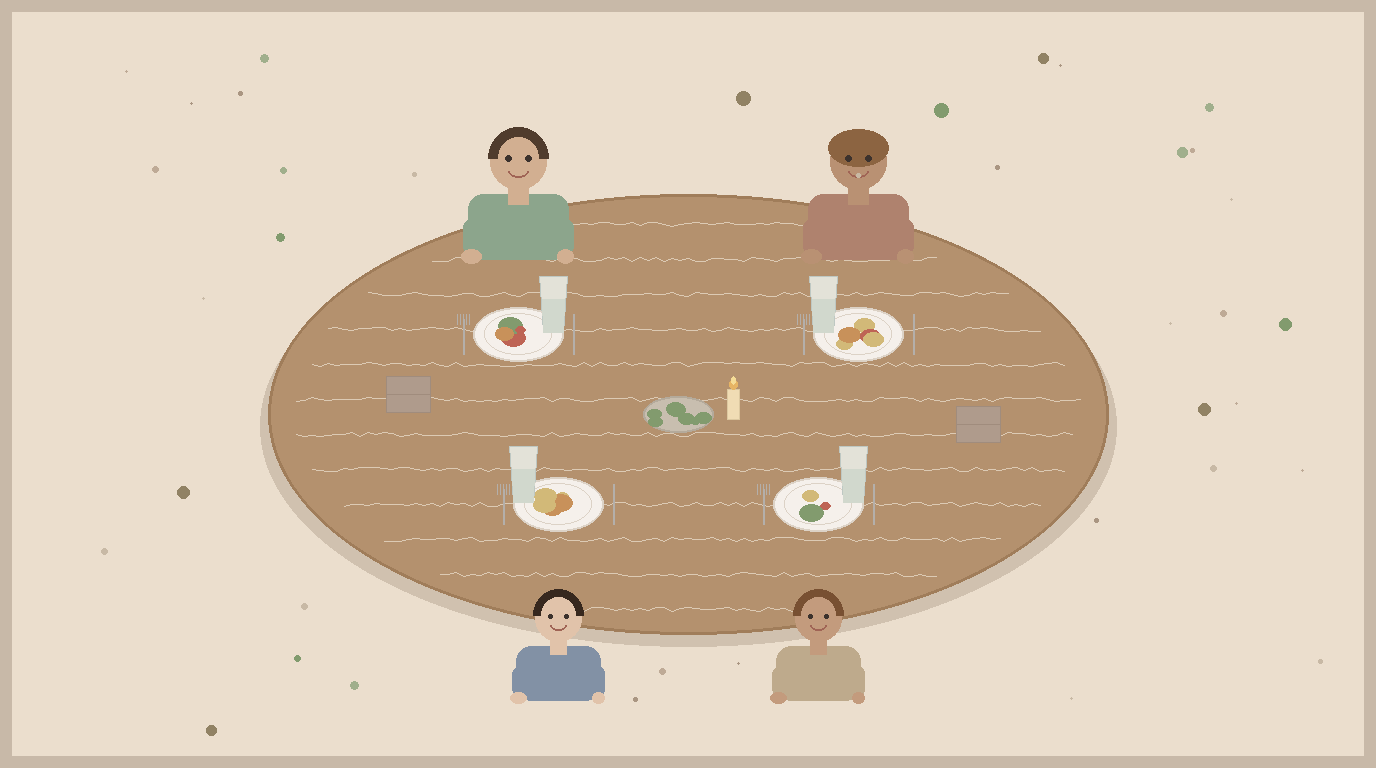
A family sitting together around a dinner table, sharing a simple meal and conversation

Why Family Dinners Matter More Than You Think: The Mental Health Case for Eating Together

It’s 6:15pm. You’re spooning reheated pasta onto plates while your seven-year-old complains that the sauce looks “weird” and your ten-year-old is angling for permission to eat in front of the TV. Your partner is still replying to a work email. The kitchen is a mess. Nobody is experiencing a Hallmark moment. And somewhere in the back of your mind, you’re wondering whether this even counts. Whether this chaotic fifteen minutes of eating in the same room actually does anything for your kids.

It does. The research on this is remarkably clear, and remarkably encouraging. It doesn’t need to be a gourmet meal. It doesn’t need to last an hour. It doesn’t need to be every night. But the simple act of sitting down together — regularly, imperfectly, with whatever food happens to be on the table — is one of the most well-documented things a family can do for everyone’s mental health.

If you’re reading this, you probably already care about family dinners. This article isn’t here to make you feel guilty about the nights you don’t manage it. It’s here to show you that the nights you do matter more than you think — and that making them happen is easier than the pressure in your head suggests.

The surprising research on family dinners

The evidence base for family dinners is genuinely impressive. This isn’t one study from a small sample in the 1990s. It’s decades of research, across multiple countries, consistently pointing in the same direction.

Children and adolescents

A landmark series of studies from Columbia University’s National Center on Addiction and Substance Abuse (CASA) found that teenagers who eat dinner with their families five or more times per week are significantly less likely to use tobacco, alcohol, or marijuana. The effect held even after controlling for family income, parental education, and neighbourhood factors. The dinner table itself was protective.

The academic benefits are equally consistent. A study published in the Journal of Developmental & Behavioural Paediatrics found that children who eat regular family meals have better vocabulary, better reading scores, and stronger academic performance overall. The mechanism isn’t mysterious: dinner conversation exposes children to more adult language, more complex sentence structures, and more back-and-forth dialogue than almost any other daily activity. Researchers at Harvard estimated that children learn about 1,000 rare words through family mealtimes — more than they pick up from being read to.

For adolescents, the mental health findings are particularly striking. A comprehensive meta-analysis in the journal Paediatrics found that regular family meals are associated with lower rates of depression, anxiety, and disordered eating in teenagers. The frequency mattered: five or more family meals per week showed the strongest association. But even three meals per week showed meaningful benefits compared to fewer than one.

The substance abuse findings from CASA are worth sitting with. Compared to teens who ate with their families two or fewer times per week, those who ate together five or more times were 35% less likely to engage in disordered eating, 24% more likely to eat healthier foods, and showed measurably lower rates of depression and anxiety. These aren’t marginal differences. They’re the kind of effect sizes that, in any other context, would make a public health intervention famous.

Parents and adults

The benefits don’t stop with the children. Research published in the Journal of Marriage and Family found that shared family meals are associated with lower stress and higher relationship satisfaction in adults. There’s something about the daily ritual of sitting down together — even briefly, even imperfectly — that acts as a relationship anchor. It creates a moment where the family exists as a unit, not as individuals rushing between tasks.

For the parent doing the cooking and planning, the benefit is more nuanced. The mental load of deciding and preparing dinner is real and well-documented. But when that effort results in a shared moment at the table — even a short and chaotic one — the sense of purpose and connection offsets some of the fatigue. The problem isn’t cooking. It’s cooking without a reason. When the table is the reason, the effort feels different.

The key finding

Here’s the part that matters most: the benefits come from the routine and connection, not from the food itself. A study in the journal Appetite found that the quality of the food served at family dinners had no significant relationship with the mental health outcomes. What mattered was whether the family sat together, whether conversation happened, and whether it happened regularly.

Read that again. The food quality didn’t matter. A frozen pizza eaten together at the table, with phones away and conversation happening, delivers more of the benefits than a three-course meal eaten in silence. This is profoundly liberating for any parent who has ever felt that family dinner “doesn’t count” unless the meal is impressive.

It’s not about the food. It was never about the food. It’s about the fifteen minutes of being in the same place, at the same time, paying attention to each other.

It’s not about the perfect dinner — it’s about showing up

The biggest enemy of family dinners isn’t lack of time or cooking skill. It’s the image in your head of what a family dinner is “supposed” to look like. The perfectly set table. The home-cooked meal with three components. Everyone smiling, engaged, and grateful. No screens, no complaining, no one kicking anyone under the table.

That version exists approximately never. And the gap between that image and reality is what makes parents feel like they’re failing — and what makes them stop trying.

What actually happens at family dinners

Real family dinners look like this: someone doesn’t like what’s on the plate. Someone needs to go to the toilet five minutes in. A glass of water gets knocked over. The conversation is mostly about school (“fine”), the dog, and who gets to choose the bedtime story. One parent is distracted. One child is eating only the bread. The whole thing takes twelve minutes.

And it still counts. Every bit of it counts. The research doesn’t describe families having wonderful, harmonious mealtimes. It describes families who regularly sit together and eat, in whatever form that takes. The consistency is the active ingredient, not the quality of the experience.

The “what” versus the “who”

We’ve written about food decision fatigue — the exhaustion of deciding what to eat after a full day of other decisions. That fatigue is one of the biggest barriers to family dinners. Not because parents can’t cook, but because by 5:30pm, the question “what’s for dinner?” has become one decision too many.

The irony is that the “what” barely matters for the benefits. The meal could be scrambled eggs. It could be sandwiches. It could be last night’s leftovers reheated and served with some carrot sticks. The family dinner benefit comes from the “who” — who’s at the table, and whether they’re talking to each other.

This is why removing the planning burden matters so much. When the meal decision is already made — through a simple weekly plan, a rotation of familiar meals, or an app that handles it for you — the 5:30pm question has an answer. And when the question has an answer, dinner actually happens. Not a masterpiece. Just dinner. Together.

Family dinners are under pressure — and it’s not your fault

Family dinner decline isn’t a personal failure. It’s a structural shift driven by forces much bigger than any individual household.

The modern squeeze

Working hours have expanded. After-school activities fill evenings. Commutes eat into family time. The average European working parent now spends less time at home during the traditional dinner window (17:00-19:00) than a generation ago. Add screen time — both parents checking work emails and children defaulting to devices — and the physical proximity of a shared table doesn’t guarantee the mental presence the research describes.

In many households, family members eat at different times out of sheer logistics: one child has football training, the other had a late snack, a parent is stuck in traffic. Nobody planned for this. It just happened, one scheduling conflict at a time, until eating separately became the default.

The numbers

Research from the Organisation for Economic Co-operation and Development (OECD) found that the percentage of families eating together daily has declined steadily across Western countries since the early 2000s. A UK study published in the International Journal of Behavioural Nutrition and Physical Activity found that only about half of families with school-aged children eat together most days.

The trend isn’t about families caring less. Parents value family dinners as much as they ever did — surveys consistently show that most parents consider shared meals important. The problem is the gap between intention and execution. Families want to eat together. Life makes it harder than it used to be.

This isn’t about creating something new

For many families, the goal isn’t to build a family dinner habit from scratch. It’s to protect one that already exists but is slowly being eroded. You already sit down together some nights. The question is whether you can make those nights a little more consistent, a little more intentional, without adding stress to an already full life.

The answer is yes. But it requires lowering the bar, not raising it.

What “counts” as a family dinner

One of the most harmful misconceptions about family dinners is that they need to meet some invisible standard to “work.” A proper meal. Everyone present. A meaningful conversation. If that’s the bar, most families fail most nights, and the whole concept starts to feel like another item on the parenting guilt list.

The research sets the bar much lower. And that’s the good news.

Any shared meal counts

Breakfast together on a Saturday morning? That’s a family meal. Sunday lunch? Family meal. A quick midweek dinner where you’re all at the table for ten minutes before someone rushes off to Scouts? Family meal. The research measures frequency of shared eating, not the specific meal or its duration.

If dinner is consistently hard — activities, late work, different schedules — look at other meals. Weekend breakfasts are often easier to protect because the time pressure is lower. A family that eats Saturday breakfast and Sunday lunch together has two shared meals per week, and that’s meaningful.

Three times a week is genuinely enough

The research shows benefits increasing with frequency up to about five shared meals per week. But meaningful benefits appear at three. You don’t need to eat together every night. You need to eat together regularly enough that it becomes a predictable part of your family’s rhythm.

Three nights a week. That’s the target. Not seven. Not five. Three. Pick the three nights that are easiest logistically, plan meals for those nights, and let the other nights be flexible. Some weeks you’ll manage four or five. Some weeks only two. The average matters more than any individual week.

Single-parent families

One parent and one child at the table is a family dinner. Full stop. The research on family meal benefits doesn’t require two parents, a certain number of children, or a specific family structure. What it requires is a caregiver and a child, sitting together, sharing food and conversation.

Single parents sometimes feel that their mealtimes “don’t count” because they don’t look like the imagined norm. They count. The child experiences the same routine, the same predictability, the same moment of undivided attention that drives the benefits in the research.

Separated families

Both households can maintain the family dinner routine independently. A child who eats with Mum three nights a week and with Dad two nights a week has five family dinners. The benefit isn’t tied to one household or one table. It’s tied to the experience of being together.

Consistency matters more than location. If Tuesday and Thursday are always dinner-together nights at Dad’s, the child internalises that rhythm regardless of which kitchen the food comes from.

Shift workers and irregular schedules

Not every family has a 9-to-5 schedule that allows a 6pm dinner. Night shifts, healthcare rotas, retail hours — millions of families navigate schedules that make daily shared dinners impossible. The answer isn’t guilt. It’s flexibility.

Weekend batch meals — a Sunday lunch where the whole family is present and the table is set properly — can carry enormous weight. A “special night” on the one weekday evening everyone is home together creates a ritual that children remember and look forward to. The frequency may be lower, but the intentionality can be higher, and the research suggests that intentional shared meals carry as much benefit as habitual ones.

Making family dinners less stressful

The biggest barrier to regular family dinners isn’t time. Multiple surveys have confirmed this. The biggest barrier is the stress that surrounds the meal: deciding what to cook, managing fussy eaters, keeping screens away, and the general feeling that the whole thing is more effort than it’s worth.

Addressing each of these reduces the friction, and lower friction means more dinners actually happen.

Remove the planning burden

We keep coming back to this because it’s the keystone. The decision fatigue of choosing what to cook is the number one reason families skip dinner or default to takeaway. If you solve that problem — with a simple weekly plan, a repeating rotation, or an app — the path to dinner becomes: come home, cook the thing on the plan, sit down.

Planning doesn’t need to be elaborate. It needs to exist. Even a rough note on your phone — “Mon: pasta, Tue: stir-fry, Wed: soup” — is enough to remove the 5:30pm blank-page feeling. The planning removes the biggest source of stress, which makes everything else easier.

Manage picky eaters without a battle

If you have a picky eater, the dinner table can feel like a battlefield. One child won’t eat anything green. Another only wants plain pasta. A third changes their mind daily about what’s acceptable. The temptation is to make separate meals or to avoid the table entirely.

Neither of those options serves the family dinner habit. What does work, according to the research, is serving the planned meal with at least one component you know each child will eat. That might mean the main dish is for the adults, but there’s always bread, always rice, always some acceptable side. The picky eater isn’t forced to eat anything. They just need to be at the table with food they can eat. Over time — and it does take time — exposure to the family meal normalises new foods more effectively than any pressure tactic.

The “one new thing” rule

A useful principle: every family dinner has at least one familiar, safe element and at most one new element. Familiar pasta with a new sauce. Known chicken with an unfamiliar vegetable. This keeps meals within the comfort zone while gently expanding it. Children (and adults) are more willing to try something new when most of the plate is already acceptable.

If everything on the plate is new, the risk of rejection is high. If everything is familiar, nobody’s palate grows. One new thing is the sweet spot.

Screen-free table: practical, not preachy

The evidence is clear that screens at the table reduce the quality of family meal interactions. But telling a family with teenagers to “just ban phones at dinner” is about as helpful as telling them to “just communicate better.”

What works in practice:

Make it a household rule, not a child rule. If the kids see parents putting their phones in a basket by the door, the rule feels fair. If it’s phones away for kids but Mum is checking emails, it breeds resentment and won’t last.

Start with a timer, not a ban. “Phones away for the first fifteen minutes” is more achievable than “no phones at the table ever.” Most family dinners don’t last much longer than fifteen minutes anyway. Once the habit is set, the timer becomes unnecessary.

Make it the default, then stop discussing it. The less you negotiate about screens at dinner, the faster it becomes normal. Put a basket by the table. Phones go in. Dinner happens. No speeches required.

Conversation that doesn’t feel forced

“How was your day?” “Fine.” End of conversation. Every parent knows this script, and it’s not a failure of your conversational skills. It’s what happens when a tired child meets a tired question.

Better prompts exist, and they don’t need to feel like a therapy exercise:

  • “What was the funniest thing that happened today?”
  • “If you could have any superpower for just one hour, what would you pick?”
  • “What are you looking forward to this week?”
  • “Who did you sit with at lunch?”

The goal isn’t deep conversation every night. It’s keeping the channel open. Some nights you’ll get three-word answers. Other nights, unprompted, your child will tell you something that matters. The dinner table is where those moments become possible. But only if the table is set, regularly, and they know it’s coming.

Starting — or restarting — the family dinner habit

Maybe you used to eat together and it fell away. Maybe you’ve never been consistent and want to start. Maybe you manage three nights a week and want to feel less guilty about the other four. Wherever you are, the path forward is the same: start small, plan the meals, and lower the bar until it’s easy enough to sustain.

Pick two nights this week

Not five. Not seven. Two. Choose the two evenings with the fewest scheduling conflicts. Tuesday and Thursday. Monday and Wednesday. Whatever works. Write those two nights down and commit to having dinner together on those nights, no matter what you eat.

The reason for two: it’s achievable. You won’t fail at two. And not failing is what builds the habit. After two or three weeks of two consistent dinners, adding a third will feel natural rather than ambitious.

Plan those two meals in advance

This is the part that makes it actually happen. On Sunday (or whenever you plan your week), decide what you’re eating on those two nights. It doesn’t need to be impressive. Pasta and salad. Eggs and bread. Something from the freezer. The point is that when Tuesday arrives, there’s an answer to the question. No deliberation, no decision fatigue, no chance of defaulting to “everyone fend for themselves.”

If you’re already using a weekly meal planning system, your family dinner nights are already covered. If you’re not, planning just two meals is the simplest possible starting point.

Let go of what it’s supposed to look like

Your family dinner might be ten minutes long. Someone might cry. The food might be average. One child might eat only the bread. None of this disqualifies it. The research doesn’t require harmony. It requires presence.

Let the dinner be messy, short, and imperfect. Let the conversation be mundane. Let the food be simple. The bar is: you were all there, in the same place, at the same time, with food on the table. That’s it. That’s enough.

Track how it feels, not how it looks

After two weeks of consistent family dinners — even just twice a week — check in with yourself. Not on whether the meals were good or the conversations were deep. On whether the evenings felt different. Whether the rush felt a little less rushed. Whether the kids mentioned something at the table they wouldn’t have mentioned in passing.

Most families report noticing a difference within two to three weeks. It’s subtle. A slightly calmer evening. A child who seems more settled. A conversation that happens naturally because the space for it exists. These aren’t dramatic changes. They’re the kind of small shifts that, compounded over months and years, become the texture of a childhood.

What your family dinner actually gives them

The studies measure outcomes: lower depression, better grades, fewer risky behaviours. But the experience your children are having is simpler than any study can capture. They’re learning that every day, no matter what happened, there’s a moment when the family gathers. A predictable, reliable pause. The food is almost irrelevant. What’s being served is attention, presence, and the quiet message that this family sits together.

That message lands differently at different ages. A five-year-old absorbs the routine without thinking about it. A twelve-year-old pretends not to care but notices when it doesn’t happen. A sixteen-year-old might resist it — and might also, years later, describe it as one of the things that made them feel secure.

You don’t need to get this right. You need to get it regular. Two nights a week, three, whatever you can manage. Simple food. Phones away. Ten minutes of being in the same room, eating the same meal, saying whatever comes to mind.

The research says it matters. But you probably already knew that. The hard part was never believing it mattered. The hard part was making it happen on a Tuesday when you’re tired, the fridge is half-empty, and nobody feels like cooking.

That’s a planning problem, not a parenting problem. And planning problems have solutions. A few meals decided in advance. A list that takes five minutes. That’s what Sorrel is for — taking the “what’s for dinner?” question off your plate so you can focus on the only question that actually matters: “How was your day?”

The answer might still be “fine.” But you asked. And they heard you. And you were all there, together, one more time.

Stop deciding. Start cooking.

Sorrel is launching soon. Sign up and we'll let you know when it's ready.

Related reading