Sorrel
← Back to blog
Smart Grocery Shopping
22 min read

The Smart Grocery List: How to Plan Your Shop, Save Time, and Stop Buying What You Don't Need

A step-by-step system for turning your weekly meal plan into an organized grocery list that saves time, cuts waste, and keeps your family on budget.

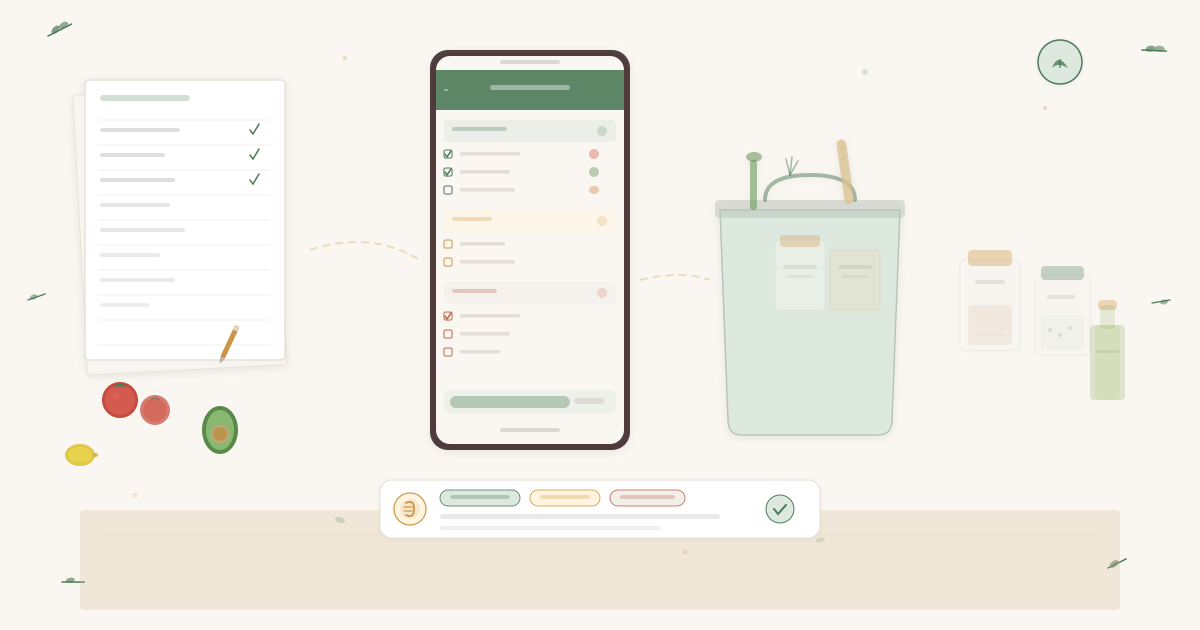
A neatly organized grocery list next to fresh ingredients on a kitchen counter

The Smart Grocery List: How to Plan Your Shop, Save Time, and Stop Buying What You Don’t Need

You’ve made the meal plan. Five dinners, mapped to five evenings, written on a sticky note or typed into your phone. It felt good. Organised. Under control. Then you walked into the supermarket and everything fell apart. You couldn’t remember if the stir-fry needed two peppers or three. You forgot to check whether you still had rice. You grabbed a bag of spinach “just in case” and a second bottle of olive oil because you couldn’t picture the one at home. By the time you reached the checkout, the trolley was full of good intentions and a few things you definitely didn’t need.

The meal plan was fine. The grocery list let you down.

This is the gap most families don’t talk about: the space between knowing what you want to cook and knowing exactly what to buy. Research published in the Journal of Consumer Research found that shoppers with organised, specific lists spend significantly less on impulse purchases than those with vague or mental lists. A separate study from the University of Pennsylvania showed that the effect is strongest when the list is structured by category — not just what to buy, but where to find it. The grocery list isn’t just a piece of paper. It’s the tool that turns a meal plan into meals on the table, and getting it right saves real time and real money.

Why your grocery list is the most important part of meal planning

A meal plan without a good grocery list is like a recipe without measurements. You know the general direction, but the execution is guesswork. And guesswork at the supermarket is expensive.

The numbers tell the story. Families who shop with organised, detailed lists spend roughly 20% less per shop than those who wing it. They also waste 30-40% less food, because they buy what they need instead of what catches their eye. That’s not a marginal improvement. For a family spending EUR 500 a month on groceries, that’s EUR 100 back in your pocket and a fridge that doesn’t turn into a graveyard of forgotten produce by Thursday.

Then there’s the time cost. A disorganised list — or worse, no list at all — leads to forgotten items. Forgotten items lead to extra trips. Those extra trips add up to two or more hours a week that you could spend doing literally anything else. According to a UK grocery industry survey, the average family makes 1.7 extra supermarket trips per week for items they forgot or ran out of. Each trip takes 20-30 minutes door to door, plus the cost of transport. Over a year, that’s the equivalent of four full working days spent on shopping you shouldn’t have needed to do.

And that’s before counting the mental load: standing in the dairy aisle trying to remember whether you already have butter at home, scrolling through your phone for the recipe you half-remember, doubling back to the produce section because you missed the onions. Decision fatigue, the same phenomenon that makes deciding what’s for dinner so exhausting, follows you into the supermarket. Every unmade decision on your list is another micro-negotiation with your tired brain.

Walking into a supermarket with a clear, organised grocery list is a fundamentally different experience. You know what you need, you know where to find it, and you know when you’re done. The stress drops, the time shrinks, and the bill at the end is smaller. That’s not a luxury. That’s just what happens when the system works.

The meal-plan-to-grocery-list method, step by step

The best grocery list isn’t written from memory. It’s built from your meal plan, systematically. Here’s how to do it in five steps, and it takes about fifteen minutes on a Sunday evening — the same time it takes to scroll through a food delivery app and give up.

Step 1: Finalise your meal plan for the week. Before you write a single item on your list, know what you’re cooking. Five dinners is enough. You don’t need to plan every snack and breakfast — just the meals that require shopping. Write them down: Monday through Friday, one meal per day. If you’re also planning lunches or weekend meals, include those too, but start with dinners. If you don’t have a meal plan yet, our guide to planning five weeknight dinners in ten minutes is a good place to start.

Step 2: List every ingredient for each planned meal. Go meal by meal. Monday’s pasta needs garlic, tinned tomatoes, pasta, basil, and parmesan. Wednesday’s stir-fry needs chicken, soy sauce, peppers, broccoli, and rice. Thursday’s soup needs onions, carrots, stock, lentils, and bread for dipping. Write everything down, even if you think you have it. You’re not filtering yet — you’re just getting a complete picture of what the week requires. If you’re working from recipes, pull the ingredient lists directly. If you’re cooking from memory, err on the side of listing more rather than less. A forgotten ingredient is a midweek trip; an ingredient you already had is just a line crossed off.

Step 3: Check your fridge, freezer, and pantry. Now walk to the kitchen. Open the fridge. Open the freezer. Check the cupboards. Cross off everything you already have. That half-bag of rice? Crossed off. The frozen broccoli from last week? Crossed off. The garlic you bought three days ago? Crossed off. This step alone eliminates 20-30% of most shopping lists, and it takes less than five minutes. It’s also where you spot things that need using up: the half-tin of coconut milk from last Wednesday, the courgette that has two days left in it, the cheese that’s fine but won’t last another week. These become inputs to next week’s plan — cook them first, before they become food waste.

Step 4: Add household staples that are running low. Your meal plan covers the meals, but families need more than just dinner ingredients. Milk, bread, eggs, coffee, fruit for lunchboxes, cleaning supplies — the things that keep a household running. Scan your kitchen for anything that’s nearly empty and add it to the list. These aren’t afterthoughts. They’re the items that trigger those annoying midweek emergency runs when you forget them. A good rule of thumb: if you’d be frustrated to discover it’s gone on a Tuesday morning, it should be on this week’s list.

Step 5: Organise the list by store section. This is the step that transforms your list from a random collection of items into a route through the supermarket. Group everything by where you’ll find it: produce, dairy, meat and fish, bakery, pantry staples, frozen, and household items. When your list follows the store layout, you move through once, top to bottom, without backtracking. That saves 15-20 minutes per shop — every single week. Over a year, that’s roughly 15 hours. Almost two full working days, recovered from the supermarket.

Organising your list for speed: the store-layout method

Most people write their grocery list in the order they think of items. Milk, then apples, then pasta, then cheese, then bananas. The result? You zigzag through the supermarket like a pinball, doubling back to produce after you’ve already passed it, looping to dairy because you remembered yoghurt in the snack aisle.

The store-layout method flips this. Instead of listing items by thought order, you list them by location.

Most supermarkets follow a similar flow: produce and fresh items around the perimeter, bakery near the entrance, dairy and meat along the back and side walls, pantry staples in the centre aisles, frozen near the end. Your list should mirror this path. Start with produce. Then bakery. Then dairy. Then meat. Then the centre aisles for tins, pasta, rice, sauces. Then frozen. Then household and cleaning products.

The effect is immediate. Instead of criss-crossing the store, you make a single sweep. No backtracking, no “oh wait, I need to go back to produce.” Each section of your list maps to a section of the store, and when that section is done, it’s done. You move forward, not in circles.

You don’t need to memorise your supermarket’s exact layout. After two or three shops with a section-organised list, the pattern becomes automatic. You’ll start writing items in the right section without thinking about it. The categories are consistent enough across most stores that your list works even if you switch supermarkets for a particular trip.

A practical template. Here’s a simple category structure that works for most European supermarkets:

  • Produce: fruits, vegetables, herbs, salad
  • Bakery / Bread: bread, rolls, wraps, pastries
  • Dairy & Eggs: milk, cheese, yoghurt, cream, eggs, butter
  • Meat & Fish: fresh meat, poultry, fish, deli items
  • Pantry / Dry goods: pasta, rice, tinned goods, sauces, oil, spices, flour, sugar
  • Frozen: frozen vegetables, frozen meals, ice cream, frozen fish
  • Drinks: juice, water, soft drinks, coffee, tea
  • Household: cleaning products, kitchen paper, bin bags, toiletries
  • Snacks & Treats: biscuits, crisps, chocolate, the one item each child is allowed to choose

You can simplify this further — even five categories (fresh, dairy, meat, pantry, frozen) work. The point isn’t granularity. It’s that similar items are grouped together so you don’t retrace your steps.

Digital vs. paper: both work, differently. Paper lists are tactile and satisfying. You can stick them on the fridge, scribble on them, hand them to your partner. There’s a reason the paper list has survived the smartphone era — crossing something off with a pen is more satisfying than tapping a checkbox. Paper also has no battery life, doesn’t need wifi, and never sends you notifications about unrelated things while you’re trying to find the tinned tomatoes.

Digital lists — whether a notes app, a shared list app, or a dedicated grocery tool — have one big advantage: multiple family members can add items in real time. Your partner remembers you’re out of washing-up liquid while you’re at work? It’s on the list before you leave the office. Your teenager ate the last of the cereal? They can add it themselves. Neither format is inherently better. The best list is the one your family actually uses, consistently.

The shared list advantage. If you shop as a family or split the shopping between partners, a shared digital list means no more “I thought you were getting that.” Everyone sees the same list, everyone can add to it, and whoever does the shop knows exactly what’s needed. It’s a small thing, but it removes one of the most common sources of grocery frustration: the communication gap between the person who noticed something was running low and the person who went to the shop.

The staples system: never run out of basics again

There are two kinds of items on a grocery list: meal ingredients and pantry staples. Most people mix them together. Separating them changes the game.

Meal ingredients are specific to your plan. If you’re making stir-fry on Wednesday, you need peppers, chicken, and soy sauce. If you’re not making stir-fry, you don’t. These items come and go with your weekly plan.

Pantry staples are the constants. Milk, bread, eggs, butter, rice, pasta, cooking oil, coffee, tea, sugar, salt, pepper, onions, garlic. Every family has a core list of 15-20 items they always need. These don’t change with the meal plan — they’re the foundation your meals are built on. Run out of any of them midweek and you’ll feel it immediately: no milk for the morning cereal, no oil for the evening fry-up, no bread for tomorrow’s lunch.

Build your family’s staple list. Sit down for ten minutes and write out everything your household goes through every week or two, regardless of what’s for dinner. Think about breakfasts (cereal, milk, bread, jam, juice), lunches (bread, sandwich fillings, fruit), cooking basics (oil, butter, onions, garlic, stock), and household essentials (kitchen roll, washing-up liquid, bin bags). Tape it inside a cupboard door or save it as a note on your phone. This is your restock checklist — the weekly scan that takes two minutes and prevents three midweek trips.

Use the “restock trigger” method. When you open the last of something — the last litre of milk, the last bag of pasta, the last roll of kitchen paper — add it to the list immediately. Don’t wait until it’s gone. Don’t trust yourself to remember later. The moment you open the last one, it goes on the list. This single habit eliminates 90% of those frustrating midweek runs for basics. Some families keep a pen and notepad on the kitchen counter specifically for this purpose. Others use a shared phone list that anyone in the household can add to. The method doesn’t matter. The discipline of “last one opened = goes on the list” is what counts.

Keep staples and meal ingredients separate on your list. Either use two sections on one list or two separate lists entirely. Meal ingredients change every week. Staples mostly stay the same. Keeping them separate means you can quickly scan the staples section and check off the regulars without thinking, then focus your attention on the meal-specific items that need more thought. Over time, the staples section becomes almost automatic — you barely read it, you just confirm.

The “always in stock” shelf. Some families take this further: they designate one cupboard shelf or one fridge section as the “always in stock” zone. Rice, pasta, tinned tomatoes, stock cubes, soy sauce, olive oil — the building blocks that make any improvised meal possible. When something on that shelf gets low, it goes on the list. When it’s restocked, it goes back to its spot. The shelf is both a shopping cue and a safety net: even on the week when the meal plan falls apart, you can always make something from what’s on that shelf.

Avoiding the five grocery list traps that waste money

Even with a solid list, there are traps that can undermine your shopping. Recognising them is half the battle.

Trap 1: Shopping hungry. It sounds like a cliché because it’s true. A study published in JAMA Internal Medicine found that hungry shoppers bought 31% more high-calorie products than satiated ones — even when they had a shopping list. The fix is simple: eat before you shop, or at minimum, have a snack. Your list is your defence, but hunger weakens it. If your regular shopping time is after work, keep a banana or a cereal bar in the car. The cost of a pre-shop snack is about EUR 0.30. The cost of impulse chocolate, crisps, and ready meals is considerably more.

Trap 2: Vague list items. “Vegetables” is not a grocery list item. Neither is “snacks” or “something for lunch.” Vague items force you to make decisions in the store, which is exactly when impulse spending kicks in. You came for “snacks” and left with three bags of crisps, a tub of hummus, two packs of biscuits, and some rice cakes that nobody will eat. Be specific. “Two courgettes, one head of broccoli, 500g carrots” is a list item. “Vegetables” is a wish. The more specific your list, the less your brain has to work in the store, and the less opportunity there is for the store’s layout and promotions to influence what you buy.

Trap 3: Not checking what you already have. This is the most common trap and the easiest to fix. A two-minute fridge check before you shop prevents buying duplicates. That second jar of peanut butter, the extra tin of tomatoes, the third bottle of soy sauce you definitely already have — all avoidable. It also prevents waste: you can plan meals around what needs using up first. The fridge check is Step 3 of the method above, and it’s the step people most often skip. Don’t skip it. Two minutes of looking saves ten euros of duplicates, and it means less food waste at the end of the week.

Trap 4: Ignoring seasonal pricing. Strawberries in January cost twice what they do in June. Courgettes in summer are half the price of winter. Asparagus in April is a seasonal treat; asparagus in November is an imported luxury. Buying produce in season isn’t just better for the environment — it saves 30-50% on fruit and vegetables, according to the European Commission’s seasonal food pricing data. A quick glance at what’s in season before you finalise your meal plan means cheaper meals without compromising on quality. In-season produce also tastes better, which means less ends up in the bin because it didn’t live up to expectations. For more on building seasonal awareness into your plans, see our guide to seasonal meal planning.

Trap 5: Brand loyalty without price comparison. Store-brand products are, in many cases, produced in the same factories as name brands. The packaging is different. The price is 30-40% lower. The contents are often identical. Consumer research by the UK’s Which? found that in blind taste tests, store brands were preferred or rated equal in the majority of product categories tested. This doesn’t mean every store brand is a winner, but defaulting to the name brand without checking is a habit that costs real money over time. For a family buying 40-50 branded items a week, switching even half to store brand could save EUR 15-20 per shop — that’s EUR 60-80 a month. For a deeper look at shopping strategies that protect your budget, see our meal planning on a budget guide.

Shopping with kids: making the grocery run work for your family

Shopping with children is a different sport. The strategies that work for a solo adult don’t always survive contact with a four-year-old who has spotted the biscuit aisle. But grocery shopping with kids doesn’t have to be a battle — and it can actually be useful.

Give kids age-appropriate roles. Toddlers can find the bananas and put them in the trolley. Primary-school kids can check items off the list (paper lists are great for this — give them the pen). Older children can compare prices between brands, weigh the produce, or be sent to fetch items from a different aisle. When children have a job, they’re invested in the trip rather than enduring it. They’re less likely to melt down from boredom or start lobbying for sweets, because they’re busy helping.

Try the “one pick” rule. Each child chooses one treat within a set budget — say, EUR 2. They can pick whatever they want, as long as it’s within the limit. This eliminates the endless negotiation (“Can I have this? What about this? Please?”) and teaches basic budgeting at the same time. One pick, one decision, done. Some families extend this to a weekly rotation: one week the child chooses a snack, the next week a drink, the next week a dessert. The predictability helps — the child knows their turn is coming, which makes the other weeks easier.

Turn shopping into learning. Grocery shopping is a surprisingly rich educational environment. Reading labels, comparing unit prices, understanding where food comes from, recognising seasonal produce — these are real-world skills wrapped in a weekly routine. You don’t need to make it a formal lesson. Just narrate what you’re doing: “We’re picking the cheaper one because it’s the same thing in a different box.” Or: “These strawberries are from Spain because it’s too cold to grow them here right now.” Children absorb more from these casual observations than from any worksheet.

Know when to shop without them. Sometimes the fastest, cheapest shop is the one you do alone, early in the morning or during a lunch break. No negotiations, no detours to the cereal aisle, no meltdown at checkout. Online grocery shopping is another option — you order exactly what’s on your list with zero aisle temptation and zero negotiations. The screen shows you exactly what you’re spending as you go, which makes it harder to overshoot the budget. For some families, alternating between in-store family shops and solo online orders is the best of both worlds: the kids learn about shopping on the weeks they come along, and the household stays efficiently stocked on the weeks they don’t.

Digital tools and the future of the family grocery list

The paper grocery list has served families well for generations. But digital tools are changing what a grocery list can do, and the shift is worth understanding — not because paper is bad, but because the right digital tool can eliminate most of the manual work.

The basic shift is from “write down what you need” to “have the list generated from what you’re cooking.” If you plan five meals and your tool knows the recipes, the ingredients list writes itself. No manual transcription, no forgotten items, no guessing about quantities. You review it, cross off what you already have, and go.

What to look for in a grocery list app. Not all grocery apps are created equal, and most families don’t need the fanciest one. The features that matter most are straightforward:

  • Shared access so everyone in the household can add items and see the current list
  • Categorisation by store section so the list is already organised when you walk in
  • Recurring items — staples that reappear each week without you having to re-add them
  • Meal plan integration so the list stays connected to what you’re actually cooking, not just what you remembered to type

Many families start with a simple shared note (Google Keep, Apple Notes, or even a WhatsApp message pinned to the top of a family chat). That’s perfectly fine for getting started. The upgrade to a dedicated tool makes sense when you want the list to build itself from your meal plan — when you want to stop being the human link between “what are we eating” and “what do we need to buy.”

Price tracking and smart substitutions. Some digital tools go further, tracking prices across stores so you can spot when your regular items are cheaper somewhere else. Others suggest substitutions when an ingredient is out of season or over budget. These features are more useful than they sound: over a year of weekly shops, even small per-item savings compound into meaningful numbers. The key is that the tool does the comparison work, not you. Your time in the supermarket should be spent shopping, not calculating.

Online grocery shopping as a list-powered strategy. Online grocery ordering — whether for delivery or click-and-collect — is a natural partner for the organised grocery list. When you shop online, you add exactly the items on your list. There are no end-cap displays, no bakery smells, no strategically placed sweets at checkout. Research from the Food Marketing Institute found that online grocery shoppers reported 12-15% less impulse spending compared to in-store shoppers. The list translates directly into a basket with no intermediate temptation.

This is exactly what Sorrel is building. You plan your family’s meals for the week, and Sorrel generates your grocery list automatically — organised by store section, adjusted for your household size, and synced so everyone in the family sees the same list. No more transcribing recipes onto scraps of paper. No more forgetting the soy sauce. The list builds itself from your plan, and you just shop.

The vision is simple: plan meals, list auto-generates, shop confidently. Whether you take that list to the supermarket or use it to place an online order, the result is the same — you buy exactly what you need, nothing you don’t, and dinner is sorted before you’ve left the house.

A good list is a quiet superpower

The grocery list doesn’t get the same attention as the meal plan. It’s not the glamorous part. Nobody posts their shopping list on social media or frames it on the kitchen wall. But it’s where the plan meets reality — the bridge between “we’re having pasta on Tuesday” and actually having the pasta, the garlic, and the tinned tomatoes in your kitchen when Tuesday arrives.

Getting your list right doesn’t require perfection. Start with the five-step method. Organise by store section. Keep a staples list. Check the fridge before you leave. Even a rough, slightly messy list beats no list at all. You’ll refine it over time, find the format that works for your family, and eventually wonder how you ever shopped without a system.

The time you save — 15 minutes per shop, no more midweek emergency runs — adds up to weeks over a year. The money you keep — fewer impulse buys, less waste, smarter brand choices — adds up faster. And the mental load you drop — no more standing in the aisle trying to remember what you need, no more guilt about the wilted spinach you bought “just in case” — might be the biggest win of all.

Your meal plan is the strategy. Your grocery list is the execution. Get both right, and the weekly shop stops being a chore and starts being something you barely have to think about. That’s the goal. Not a perfect kitchen. Just a system that works, week after week, without drama.

Stop deciding. Start cooking.

Sorrel is launching soon. Sign up and we'll let you know when it's ready.

Related reading